Park and Ride in Paris: the Sticker Comes Before the Space
In Amsterdam what you do on the day decides the price. In Paris an administrative question decides weeks before departure whether you may drive in at all — and only after that is settled do the parking tariffs matter.

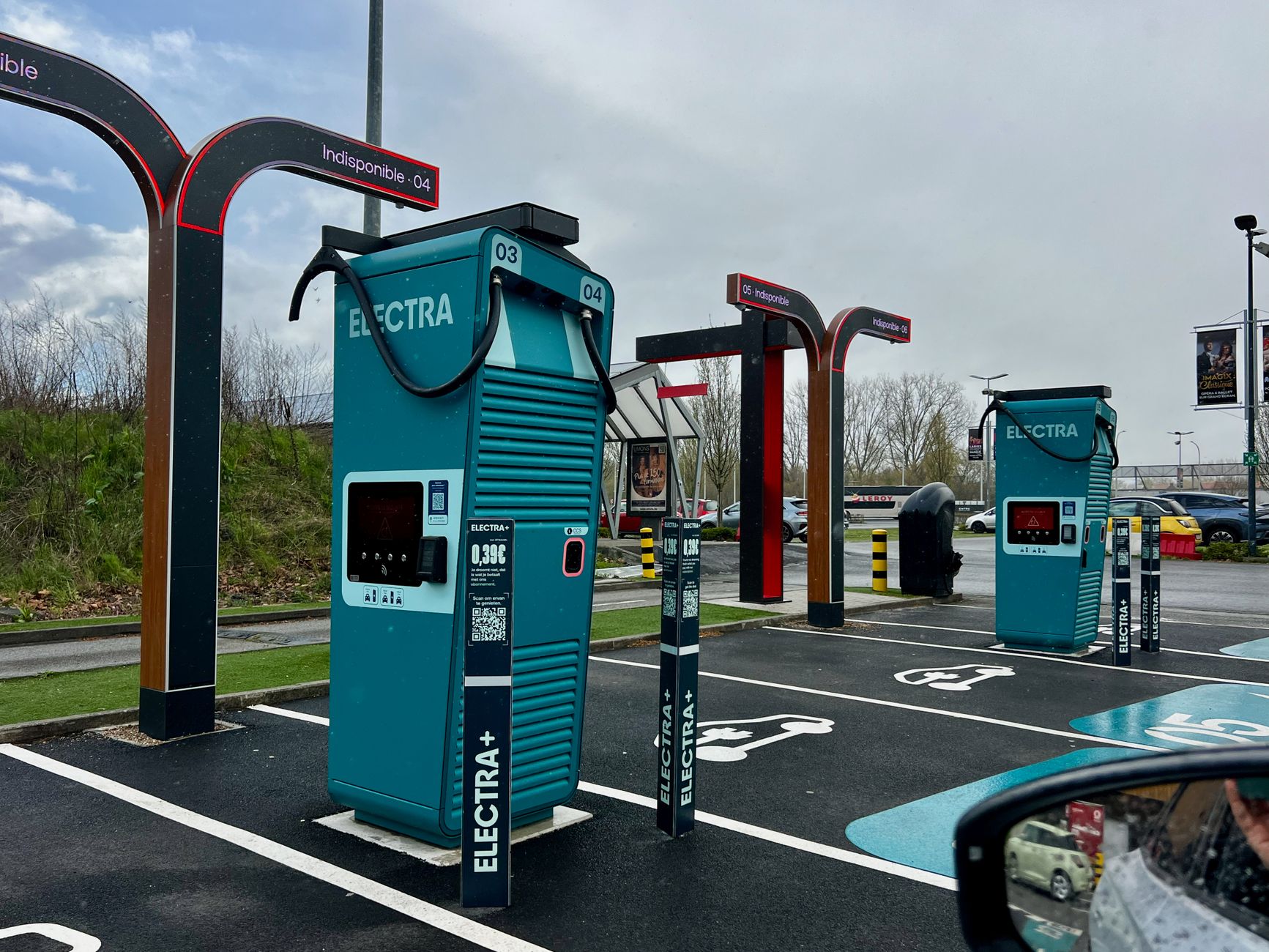
Anyone researching park and ride in Paris starts by looking for prices. That points the wrong way. The most expensive mistake on the road to Paris is not a ten-euro parking fee but a €68 penalty — and it is made at home, weeks before you set off.
The reason is the Zone à faibles émissions, the ZFE, and the windscreen sticker it requires. That sticker does not decide what the trip costs; it decides whether the trip is legal. So it comes first here.
Without a Crit’Air sticker the journey never starts
The ZFE métropolitaine covers 77 communes inside the A86 motorway; the A86 itself is explicitly excluded and stays open to all. Inside that ring, since 1 January 2025, vehicles rated Crit’Air 5, 4 and 3, and unclassified vehicles, may not drive at all. For cars, light commercial vehicles and two-wheelers the restriction runs Monday to Friday, 8am to 8pm, public holidays excepted; for lorries and buses, seven days a week at the same hours.
Crit’Air 3 catches more foreign cars than people expect: petrol vehicles first registered before 1 January 2006, and diesels first registered before 1 January 2011. A twelve-year-old diesel that is waved through every German low emission zone falls into that band in Paris.
Now the point most visitors get wrong. The Métropole du Grand Paris states it plainly in its own FAQ: the ZFE applies to vehicles from other French regions and from abroad alike, so the Crit’Air sticker is compulsory to drive inside it. A German green Umweltplakette does not substitute for it and carries no weight in France.
Ordering is only possible through the government site certificat-air.gouv.fr. For a French-registered vehicle the sticker costs €3.85 including postage; for a foreign-registered one the German motoring club ADAC quotes €5.11 (as of 2026). Commercial resellers charge considerably more for the identical piece of paper.
The price is not the issue, though. The lead time is. The sticker goes by post to the address held on the registration document, and delivery abroad tends to take weeks rather than days, so order it as soon as the trip is fixed. Driving without one costs €68 for vehicles up to 3.5 tonnes and €135 for heavier ones.
What applies in 2026 — and why it is not a free pass
Decree AP/2025/501 of 16 December 2025 extended the Métropole’s educational period by a year: the organisation of penalties, due from 1 January 2026, moves to 1 January 2027. The decree gives two reasons — the state procurement for automated enforcement equipment could not be deployed in 2026, and the parliamentary process on the economic simplification bill, which contained an article 15 ter abolishing the ZFEs, had not concluded.
That process has since concluded. On 21 May 2026 the Conseil constitutionnel struck the ZFE abolition out of the law — on procedural grounds, as a rider with insufficient connection to the bill, not after examining the policy itself. The ZFEs therefore remain in force.
So the restriction stands in law and organised enforcement will not happen in 2026 — though the decree itself notes that offences could still be recorded while the ZFEs remain in force. Arriving in a Crit’Air 3 vehicle puts you in a grey zone with an expiry date, and the political argument is adjourned rather than over.
Crit’Air 3 vehicles can also apply for the Pass ZFE 24h: 24 full calendar days a year, requested at least 15 days before first use and declared 24 hours ahead for each day. It is no use as a spur-of-the-moment fix.
The Parkings Relais: 78 sites, and not one in Paris
Île-de-France Mobilités awards its Parking Relais label to car parks meeting fixed commitments: a guaranteed space, video surveillance and anti-intrusion measures, reserved bays for two-wheelers, car sharing and car pools, and charging points. The region’s open dataset lists 78 such sites with roughly 23,400 spaces; Île-de-France Mobilités itself quotes more than 26,000 secured spaces (as of end of July 2026).
The distribution tells you more than the total: 31 sites in Seine-et-Marne, 16 each in the Yvelines and the Val-d’Oise, six each in the Essonne and Seine-Saint-Denis, two in the Val-de-Marne. None in Paris itself, and none in the Hauts-de-Seine. The network begins where the ZFE ends — which is exactly what makes it useful to a visitor.
The sites are run not by the transport authority but by car park operators — 55 by Effia, eleven by Indigo, the rest by SAEMES and smaller firms. Subscriptions and barrier access run through the Navigo pass, which doubles as the key.
P+R Paris prices: why there is no network tariff
Ask the transport authority what it costs and you get a strikingly honest answer: to find out the price of a subscription at a given Parc Relais, you must contact that site’s operator. There is no network tariff, because the car parks do not belong to the authority.
The cheap rate everyone reads about is a subscription tied to a Navigo season ticket (annual, monthly, imagine R or senior) — for annual pass holders it drops to zero euros at many sites, but only within the limit of available spaces and on condition of regular use. The dataset flags 40 of the 78 sites as free of charge and 38 as paid; free of charge means free for the eligible subscriber, not for anyone who drives in.
Two real sites show what a visitor pays.
The Parc Relais Sucy-Bonneuil on the RER A (Effia, 463 spaces) counts as a free site. Without a subscription the walk-up tariff applies: first hour €0, three hours €4.10, six hours €5.40, twelve hours €7.80, 24 hours €10.20 — and a full week at a flat €16. The zero rate requires an annual Navigo pass and at least nine entries and exits a month; on a monthly Navigo the same subscription costs €45 a month.
The Parc Relais Val d’Europe (SAEMES, 626 spaces, also RER A) is flagged as paid and has charged, since 1 January 2026: one hour €1.90, three hours €4.90, 24 hours €8.60. Packages run alongside — a weekend from Friday 6pm to Monday 9am for €20, a week for €37, a fortnight for €70. One detail matters for estates with roof boxes and for vans: the headroom is 1.90 metres.
Fares come on top. Since 1 January 2026 a single Métro-Train-RER ticket costs €2.55 anywhere in Île-de-France, the Navigo Semaine €32.40 and the Navigo Mois €90.80.
Park and ride for Disneyland Paris
The resort sits at Marne-la-Vallée in Seine-et-Marne, well outside the A86 and therefore outside the ZFE. Arrive from the east on the A4 and go no further, and you never touch the zone.
The arithmetic is still worth doing. The resort’s visitor car park costs around €30 per day for a car (as of 2026); the Parc Relais Val d’Europe sits one single RER A stop short of Marne-la-Vallée–Chessy, directly off the A4, and charges €8.60 per 24 hours. Over a weekend from Friday evening to Monday morning that is roughly €90 against a €20 package, plus four single fares at €2.55 for two people.
Two caveats belong with it: the 1.90-metre headroom, and changing trains with luggage. A party of four with suitcases should price the last leg and check what a booked transfer costs by vehicle class and distance — with a full car the comparison comes out closer than the tariff table suggests.
Leaving the car in Paris: the kerbside comparison
To give those figures a yardstick: Paris kerbside parking is chargeable Monday to Saturday, 9am to 8pm, free on Sundays and public holidays, and nobody may occupy the same space for more than six consecutive hours.
In zone 1, the 1st to 11th arrondissements, one hour costs €6, two hours €12, three hours €24, four hours €39, five hours €57 and the permitted maximum of six hours €75. In zone 2, the 12th to 20th, the steps are €4, €8, €16, €26, €38 and €50. Heavy vehicles — combustion cars over 1.6 tonnes, low-emission ones over 2 tonnes — pay triple: €18 for the first hour and up to €225 for six hours in zone 1.
Six hours in the 3rd arrondissement therefore costs more than a full week at the Parc Relais Sucy-Bonneuil, and failing to pay triggers the forfait post-stationnement: six hours flat, however briefly you stayed. For a method of costing a city break line by line, the breakdown of what a weekend in Frankfurt adds up to transfers well enough — only the parking line is higher in Paris.
Which site suits your approach
The choice becomes simple once you think from the motorway rather than the map — the region’s dataset assigns each site its access road.
A4, from the east (Metz, Saarbrücken): Val d’Europe with 626 spaces on the RER A, Esbly with 647, plus the smaller sites at Lagny-Thorigny and Meaux. From Frankfurt it is 573 km and just under six hours of pure driving time, breaks and jams excluded — which rather raises the question of whether the car is the right tool. If it is not, a guide to departures from Frankfurt sets out what the morning actually looks like.
A1, from the north (Lille, Brussels): Louvres on the RER D and the two sites at Dammartin–Juilly–Saint-Mard, all three free of charge. A15, from the north-west: the densest cluster in the network, around Cergy — Trois Gares with 701 spaces, Neuville with 724 and Genottes with 612, all on the RER A, plus Pontoise Canrobert with 503. A13, from the west: La Verrière with 745 spaces, the largest site of all, and Achères-Ville with 600. A6 or A10, from the south: Massy-Palaiseau with 400 spaces on the RER B and C.
How the Dutch solve the same problem — with a discount the system verifies against your actual travel behaviour — is covered in park and ride in Amsterdam. The German counter-model, where the space costs nothing and the ticket costs everything, is set out in park and ride in Cologne, and the country-wide overview in park and ride in Germany.
On balance Paris is the case where parking is the smaller question: ten euros for 24 hours, set against €75 for six hours at the kerb, is not a bargain but a different price level. The real hurdle comes earlier and is called Crit’Air — barely five euros, several weeks, and no forgiveness for leaving it late. All figures reflect the position in 2026; tariffs and ZFE rules in Île-de-France change regularly. More facilities of this kind are covered under Park & Ride.
Keep reading

Park & Ride
Park and Ride Munich: 38 City Sites, Three Price Levels, Day Rates from €1
Park and ride in Munich in 2026: the 38 sites of the city-owned P+R Park & Ride GmbH with more than 14,000 spaces, day rates of €1.00 to €2.00, which U-Bahn and S-Bahn lines they serve, the standard rate for non-travellers, and how it compares with parking in the centre.
Dr. Eva Sommer25 September 2026
Park & Ride
Park and Ride Amsterdam: €6, but Only on Condition
P+R Amsterdam in 2026: €6 per 24 hours off-peak, €13 before 10am — and the public transport rule that regularly costs visitors the discount.
Dr. Eva Sommer13 August 2026
Park & Ride
Park and Ride in Berlin: A Patchwork, Not a System
Park and ride in Berlin, 2026: dozens of sites at U-Bahn, S-Bahn and regional stations, mostly free, with no central authority — and a fare boundary that runs through the middle of some stations.
Dr. Eva Sommer6 July 2026
Park & Ride
Park and Ride Düsseldorf: Free at Rheinbahn Stops, Priced at the Airport
Park and ride in Düsseldorf in 2026: more than a dozen free Rheinbahn car parks with over 1,400 spaces — and the one paid CombiTicket at the airport that proves the rule.
Dr. Eva Sommer3 July 2026
Park & Ride
Park and Ride in Cologne: Free Parking, but Only With a Ticket
Park and ride in Cologne in 2026: 24 KVB sites, around 5,400 spaces, parking free of charge — with a valid ticket and for no more than 24 hours. Fares, Weiden West, Porz and the low-emission zone.
Dr. Eva Sommer17 September 2026