Park and Ride Munich: 38 City Sites, Three Price Levels, Day Rates from €1
Munich owns its own park-and-ride company, and its tariff is so low it looks almost symbolic: €1.50 for up to 24 hours at most sites. Anyone who knows a city centre where an hour underground can cost €6.50 will see why this is less a parking product than a transport-policy argument.

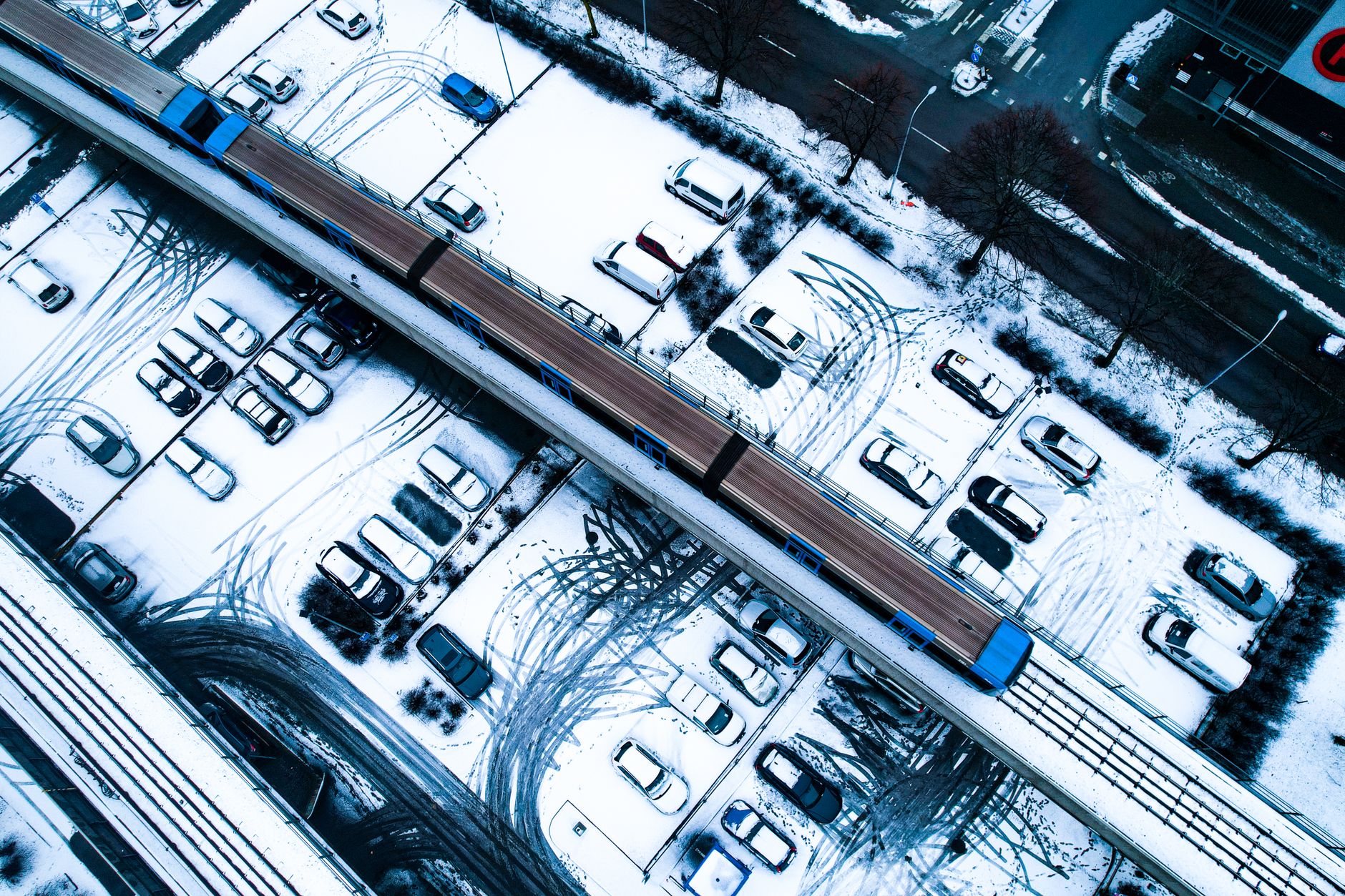
In most large German cities, park and ride is a job shared between the transport association, the railway and the local councils, with the result that nobody is really in charge of the whole thing. Munich settled the question differently and early. P+R Park & Ride GmbH belongs to the city and, by its own account, runs 38 park-and-ride sites with more than 14,000 car spaces in Munich and the surrounding area (as of 2026). On top of that come the sites run by other municipalities and operators across the area of the Munich transport association, the MVV. In its published baseline figures the MVV puts the total across its network at around 28,700 park-and-ride spaces, with an average of roughly 11,900 cars parked on them.
That split matters more in practice than it sounds. The city company’s sites generally charge, if only a little. Elsewhere in the MVV area, according to the city, a large share of the sites are free. So if you are coming in from Freising, Dachau or Ebersberg, you can often park for nothing at your local station, and that, as the city itself advises, is usually the better choice. Park and ride works best when it starts as far out as possible.
Three price levels, set by distance
The city company groups its sites into price levels according to their distance from the centre. The closer in, the dearer, and the principle is deliberate: switching to the train early should pay.
| Price level | Day ticket (up to 24 h) | Monthly card | Subscription per month | Examples |
|---|---|---|---|---|
| R | €1.00 | €9.50 | €7.92 | Garching-Forschungszentrum, Garching-Hochbrück, Hallbergmoos, Grafing Bahnhof, Aßling |
| P | €1.00 | €15.00 | €11.67 | Petershausen |
| 1 | €1.50 | €13.00 | €10.83 | Fröttmaning, Messestadt Ost, Neuperlach Süd, Moosach, Allach, Riem, Trudering, Westkreuz |
| 2 | €2.00 | €22.00 | €18.33 | Heimeranplatz, Olympiazentrum, Westfriedhof, Mangfallplatz, Innsbrucker Ring, Studentenstadt |
All prices are from the company’s tariff list, as of 2026. The subscription card replaces the old annual card: its monthly price is a twelfth of the former annual price, with a minimum term of three months and monthly notice after that. Occasional users can buy a ten-trip card for the open car parks (€12.00 at level 1, €18.00 at level 2) and, for the barrier-controlled garages, a stored-value card that costs €16.20 and carries €18.00 of parking credit.
The striking thing is what the table implies: a level-1 monthly card costs €13. That is less than a single afternoon can cost in an old-town garage.
Which lines the sites serve
The 38 sites are not spread evenly around the city; they follow the rail corridors. Here is an overview by direction, with the lines as listed by the operator.
North (U6, U2, S1): Fröttmaning on the U6, with around 1,300 spaces over nine levels, is one of the largest sites in the whole network. Further out come Garching-Hochbrück and Garching-Forschungszentrum, also on the U6 and in the cheap R level. Studentenstadt is on the same line but already at level 2. Feldmoching links the S1 and U2, Moosach the S1 and U3.
East (U2, S2, S4, S6, S8): Messestadt Ost is the end of the U2, Trudering connects the S4, S6 and U2, Riem is on the S2, Daglfing and Unterföhring on the S8, and Vaterstetten and Grafing Bahnhof on the S4/S6.
South-east (U5, S7): Neuperlach Süd links the S7 and U5, Perlach is on the S7, and Michaelibad and Innsbrucker Ring are on the U5 and the U2/U5 respectively.
South and south-west (U3, U6, U1, S7, S20): Fürstenried West, the end of the U3, has both an underground garage and an open car park; Aidenbachstraße is on the same line, Großhadern on the U6, Mangfallplatz on the U1, and Solln on the S7 and S20.
West (S2, S3, S4, S6, S8, U1, U4/U5): Westkreuz (S6/S8), Aubing (S4), Freiham (S8), Langwied and Lochhausen (S3), Allach and Karlsfeld (S2), and Westfriedhof on the U1. Heimeranplatz, finally, is the most central site in the network, with the U4, U5, S7 and regional trains.
The city explicitly advises choosing a site not by its distance from the centre but by whether it gets you to your destination without another change. If you work in Schwabing, the U6 from Fröttmaning takes you there directly, whereas from the more central Heimeranplatz you would have to change in the city centre.
The standard rate: if you are not taking the train
The low price comes with a condition: the sites are meant for people who continue by bus or train. At four of them, Fröttmaning, Messestadt Ost, Olympiazentrum and Heimeranplatz, other drivers may park too, but at the higher standard rate. The intended users are visitors to the Allianz Arena, the Messe München trade-fair grounds or the Olympic Park who walk on from the car park.
The difference is considerable. At Fröttmaning the standard rate is €10.00 for up to 24 hours instead of €1.50. At Olympiazentrum, non-travellers pay €5.00 for the first two hours, then €2.00 an hour up to a maximum of €20.00, instead of the flat €2.00 park-and-ride rate (as of 2026). Checks may be made on whether you really did continue by public transport, so keep your ticket until you leave, even if it is a Deutschlandticket.
How Fröttmaning behaves on match days, and why its park-and-ride garage is not simply a cheaper alternative to the arena’s own car parks, is covered in detail in our guide to parking at the Allianz Arena. One current restriction is worth knowing: from 19 October 2026 the ramps in the Fröttmaning park-and-ride garage are being refurbished. On the nights of 2 to 4 November only decks 1 to 3 can be used; the rest of the time, traffic is controlled by lights section by section. The operator expects the work to finish on 6 December 2026.
Messestadt Ost, for its part, is the obvious site for trade-fair visitors, and on fair days commuters and fair-goers compete for the same spaces. The city notes that during big events such as the Oktoberfest, trade fairs, football matches or concerts, individual sites may fill earlier, and recommends planning a fallback on the same or a neighbouring line.
Twenty-four hours and not a minute more
At most sites the maximum stay is 24 hours, and that applies even with a monthly or subscription card. Overstaying can trigger a contractual penalty. Longer stays are allowed only at selected sites, and here the sources do not quite agree. The operator’s tariff list names Fröttmaning, Messestadt Ost, Daglfing, Freiham, Westkreuz, the long-stay area at Grafing Bahnhof and Moosach; each further 24-hour block costs €4.00, while Moosach charges €1.00 an hour after the first 24 hours. The city portal lists Neuperlach Süd instead of Westkreuz and Moosach. If in doubt, the signs at the site and the operator’s tariff list are what count (as of 2026).
Which leads to a point that cannot be made often enough: in Munich, park and ride is not a cheap substitute for airport parking. The city says so itself, and the arithmetic agrees. Anyone away for a week pays for every day even at the few multi-day sites, and then crosses half the city with luggage. What the terminal car parks actually cost is set out in our guide to parking at Munich Airport; how the airport’s car parks are laid out and which serves which terminal is also covered in the airport guide’s overview of Munich parking. And if you would rather leave the car at home altogether, a guide to booking an airport transfer and what it costs covers the third option.
The sums against the city centre
How wide the gap is to parking in the centre shows up in a simple comparison: an ordinary weekday, one person, six hours in town.
In the Contipark Marienplatz garage on the Rindermarkt, every hour or part of an hour costs €6.50, with a daily maximum of €45.00; six hours comes to €39.00. At the City-Parkhaus on Färbergraben, a few steps from the pedestrian zone, it is €4.00 an hour, so €24.00 (as of 2026).
With park and ride you pay €1.50 at Fröttmaning plus a single-person day ticket for zone M at €10.10, a total of €11.60. If you already hold a Deutschlandticket at €63 a month, you pay only the €1.50.
For two people the margin narrows: two day tickets plus parking come to €21.70, while six hours at Färbergraben would be €24.00. On short visits for two, the garage can hold its own. For commuters, by contrast, the gap is enormous: the level-1 subscription costs €10.83 a month, a permanent space in the City-Parkhaus €285.60. Which central garages charge what, where the entrance is only 1.80 metres high and how the residents’ zones work is covered in our guide to parking in central Munich.
One factor weighs more heavily in Munich than price: the low-emission zone. It covers the Mittlerer Ring, the city’s middle ring road, and everything inside it, and since February 2023 diesel cars meeting Euro 4 or worse have been barred from it, with exemptions for residents and deliveries among others. The city names park and ride as the way out for those affected. Most sites lie well outside the ring. A few level-2 sites, Heimeranplatz among them, sit right next to it, however, and since the ring road itself is part of the zone, check your approach carefully.
How Munich’s model looks next to other cities
By German standards the Munich model is one of the most thorough. Frankfurt, for instance, has barely 2,150 park-and-ride spaces and has only recently begun experimenting with €20 monthly cards tied to a regional transport ticket. How fares there are structured, with a day ticket for the city at €7.75, is explained in the overview of tickets and fares on Frankfurt’s public transport. Munich charges more per journey but far less for the parking space, and offers many times the capacity.
For commuters from further afield, the deciding question is often not the tariff but the route. Someone driving in from Augsburg, for example, arrives on the A8 at Munich’s western edge, where Langwied and Lochhausen sit on the S3; whether to switch there or at a station closer to home depends on drive time and congestion. A first idea of how long the drive from Augsburg to Munich actually takes helps with that judgement.
What electric cars and campervans need to know
Two misconceptions persist. First, electric cars do not park free at park-and-ride sites. The Bavarian rule allowing vehicles with an E number plate to park free for up to three hours applies to public on-street spaces, not to the privately managed sites of P+R GmbH. Some sites do have chargers; Fröttmaning has eight run by the municipal utility. Second, the garages have height limits that rule out vans and campervans; at Fröttmaning it is 2.00 metres. The individual site pages list height, lifts and accessible spaces.
Payment varies by site. In the barrier-controlled garages your number plate is read on entry and you pay at the machine before leaving, or in advance through the operator’s online ticket shop. At the open car parks you buy the day ticket at the machine or through the EasyPark app, which adds a service fee.
When switching at the edge of town pays off
I would recommend park and ride in Munich to almost anyone spending a whole day in the city on their own, and to every commuter without exception. The tariff is so low that it no longer tips any calculation; what matters is the line and the time of day. It is less clear-cut for couples and families on a short trip to the centre, where a day ticket for each person can eat up the advantage; for them, the cheaper garages in the centre are worth a look. And if you drive an older diesel, you have little choice anyway.
Munich shows what park and ride can be when a city treats it as its own responsibility: not a leftover at a few stations, but a network with price levels, subscriptions and a clear policy aim. How other cities tackle the same task, with free sites, annual cards or app booking, is compared in our overview of park and ride in Germany. All prices are as of 2026; the current tariff list of P+R Park & Ride GmbH takes precedence.
Keep reading
Park & Ride
Park and Ride in Germany: What the Concept Actually Delivers
Park and ride in 2026, city by city: Munich between €0.50 and €1.50 a day, Hamburg with a €100 annual card, and the maths against parking in the city centre.
Dr. Eva Sommer15 August 2026
Park & Ride
Park and Ride in Cologne: Free Parking, but Only With a Ticket
Park and ride in Cologne in 2026: 24 KVB sites, around 5,400 spaces, parking free of charge — with a valid ticket and for no more than 24 hours. Fares, Weiden West, Porz and the low-emission zone.
Dr. Eva Sommer17 September 2026
Park & Ride
Park and Ride Nuremberg: 645 City Spaces, 300 Across the VGN
Park and ride in Nuremberg 2026: six city sites with 645 spaces, 300+ across the VGN network – mostly free, with app routing rather than a ticket machine.
Dr. Eva Sommer5 August 2026
Park & Ride
Park and Ride in Leipzig: Free, No Ticket Required, No Barrier
Park and ride in Leipzig in 2026: seven city sites with around 3,130 spaces, all free of charge and open around the clock. Fares, the Messe, Stötteritz and the low-emission zone.
Dr. Eva Sommer17 September 2026
Park & Ride
Park and Ride Stuttgart: 215 Sites Between the Basin and the Fildern
Park and ride in Stuttgart 2026: 215 sites with roughly 17,370 spaces across the VVS network, a six-month subscription instead of a day ticket – and why the city's basin shapes where it all sits.
Dr. Eva Sommer11 August 2026