Park and Ride Amsterdam: €6, but Only on Condition
Amsterdam prices its park-and-ride sites far below anything in the centre. But the low rate is not a price, it is a reward — and anyone who fails the condition attached to it finds a very different sum on the payment machine.

Park and ride works on a different logic in Amsterdam than it does in German cities. Here the cheap rate is not the normal case you can deviate from; it is a discount you earn, through a particular behaviour that the system checks.
Understand that and you park in Amsterdam for a fraction of what the centre costs. Miss it and you end up at the payment machine looking at a figure you had not budgeted for.
This piece explains the condition before it explains the prices. The order is where the usefulness lies.
The 2026 tariff
Amsterdam works with two rates, and the difference depends entirely on when you arrive.
The cheap rate is €6 per 24 hours. It applies if you drive onto the site after 10am, Monday to Friday — and at any time at weekends.
The expensive rate is €13 for the first 24 hours, applying to arrivals before 10am, Monday to Friday. Each further day then reverts to €6.
From which follows a rule almost nobody remembers and which is worth real money: the surcharge hits the first day only. Arrive at half past nine midweek and stay three days and you pay 13 plus 6 plus 6. Arrive half an hour later and you pay 6 three times over. That half hour is worth seven euros.
For a weekend visit the time of day is irrelevant. On Saturdays and Sundays the low rate applies around the clock — which is precisely when most visitors from Germany turn up.
The condition people fail
Now the part that separates Amsterdam from any German park-and-ride site.
The discount applies only if you genuinely travel into the centre on public transport. Not if you buy a ticket. Not if you show one. But if the system can see that you travelled.
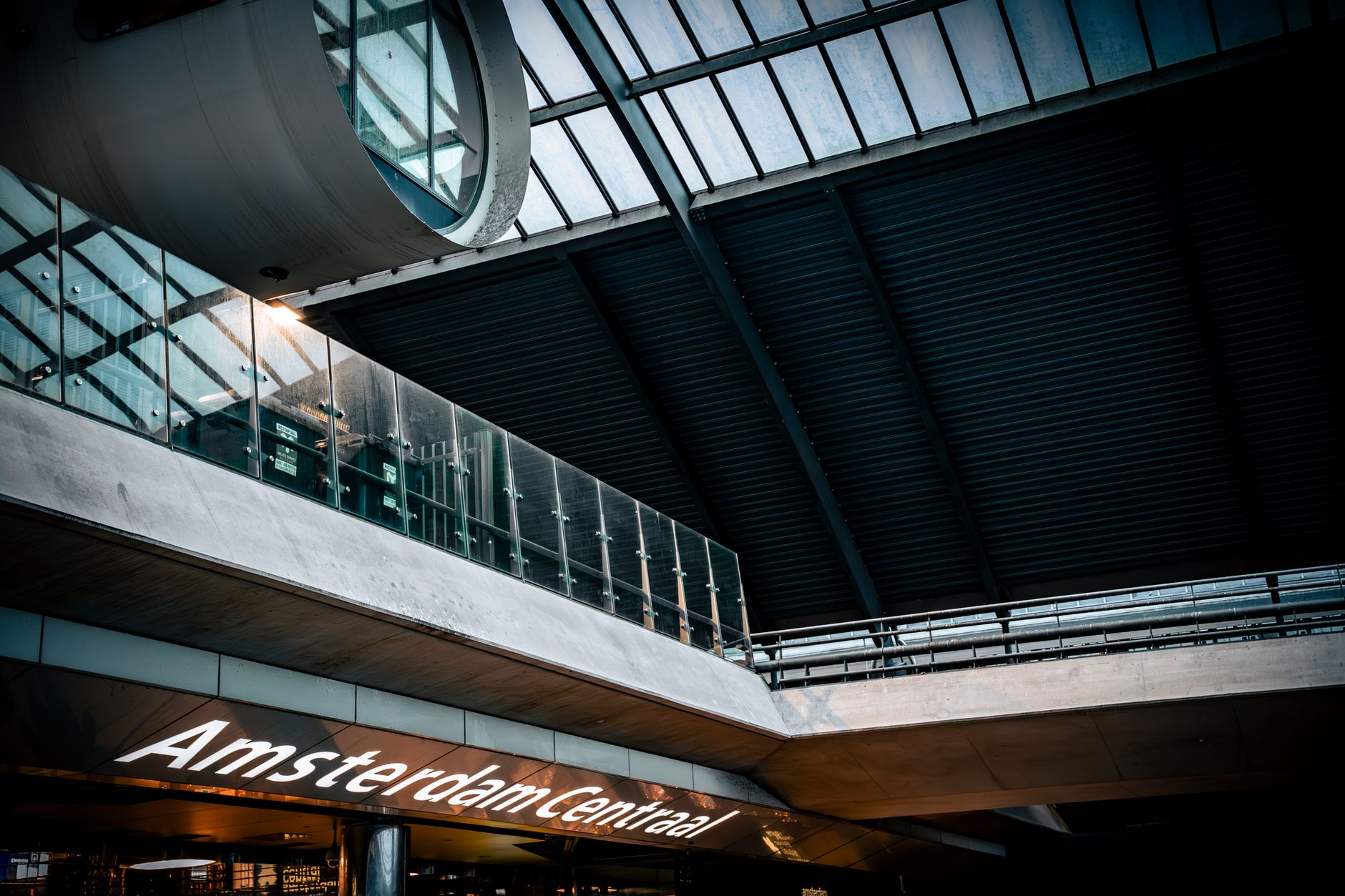
In practice this is checked through your check-in and check-out records. Your final check-out on the way in, and your first check-in on the way back, have to happen at a stop flagged as city centre. Amsterdam Centraal, Dam, Leidseplein, Rembrandtplein and Waterlooplein are among them.
And the return journey has to begin from the centre. Travel in, then meet friends in an outer district and return to your car from there, and you have not met the condition — even though you spent the whole day on public transport.
That sounds pedantic and has a clear purpose. The city is not subsidising parking; it is subsidising not driving in. The payment goes to people who genuinely leave the car at the edge and reach the centre by other means.
Fail the condition and you lose the discount and pay the site’s ordinary parking tariff. That is the figure that makes the bill hurt.
Which ticket counts — and which does not
Here is the second trap, and it is newer than the first.
Accepted are the OV-chipkaart, a paper ticket, and at selected sites the special P+R GVB ticket.
Not accepted are barcode tickets and checking in with a debit or credit card via OVpay. That is particularly awkward, because OVpay is the most convenient way to use public transport in the Netherlands: tap the card on the reader, done, no ticket purchase at all. That convenient route is exactly what costs you the P+R discount.
So anyone driving to Amsterdam intending to use P+R has to choose the more cumbersome ticket format deliberately. This is where most visitors come unstuck, because the information does not appear where you would expect it — namely at the card reader itself.
Settle it before you board, not at the machine when you pay.
The sites and their lines
Amsterdam runs around ten P+R facilities, and they differ less in price than in what serves them.
Sloterdijk is the most versatile: metro 50 and 51, tram 19, bus 22, and a mainline railway station on top. If your day might extend beyond the city, this is the one.
Johan Cruijff ArenA sits in the south-east, served by metro 54 and the train. It is a large site and correspondingly busy on match and concert days — the one location where checking the events calendar before setting off is worth the minute.
Noord and Boven ‘t Y lie north of the IJ and both hang off metro 52, which runs under the water to Amsterdam Centraal in a few minutes. For anyone approaching from the north, that is the shortest way in.
Zeeburg 2 and Zeeburg 3 to the east are served by tram 26 and bus 37. Tram 26 runs straight to the central station.
Bos en Lommer (tram 7, bus 21), Olympisch Stadion (tram 24) and VUmc lie west and south respectively. The VUmc site carries a restriction worth knowing: it operates as P+R at weekends only.
RAI is the exception. The connections are excellent — metro 51 and 52, tram 4 — but the maximum stay here is 24 hours. Ideal for a day trip, useless for a long weekend.
Choosing a site by the way you approach
A choice between ten facilities looks unmanageable and becomes very simple as soon as you think about it from the motorway rather than from the map.
Amsterdam is enclosed by a ring road, and the approach roads feed into it on different sides. The principle is: take the site on the side you are arriving from, and do not drive round the city. Every kilometre of ring you avoid is the real time saving — not the minute by which a metro beats a tram.
Arriving from the east, on the road in from Amersfoort, Zeeburg is the obvious way in. Tram 26 runs from there straight to the central station.
Arriving from the south, from the direction of Utrecht, you meet Johan Cruijff ArenA and RAI first. For a day trip the RAI is ideally placed; for several days it is ruled out by the 24-hour limit and the ArenA takes over.
Arriving from the south-west, from The Hague and past the airport, Olympisch Stadion and, at weekends, VUmc are the right choices.
Arriving from the north, stay north of the water and use Noord or Boven ‘t Y. Metro 52 makes the crossing for you, which by car would take considerably longer.
And arriving from the west, or unsure, head for Sloterdijk. It is the most flexible site on the network, because metro, tram, bus and train all meet there.
None of this is a rule, only a rule of thumb — but it spares you the most common mistake, which is driving half way round the ring to a site somebody on the internet called the best one.
Four days, and not an hour more
At all the other sites you may stay a maximum of 96 hours, four days. That is generous and covers any normal city break.
What happens if you overrun still matters: the P+R tariff stops applying and the ordinary hourly rate takes over — and that rate was never designed as a long-stay product in Amsterdam. A single forgotten day can cost more than the four paid days before it.
So if you meant to drive back on Sunday evening and push it to Monday morning, work out first when your 96 hours expire. The clock starts at entry, not at midnight.
How payment actually works
The process at the end is where everything comes together, and it runs to a deadline.
At the machine you enter your parking ticket or your registration number and then hold your transport card against the reader. The system checks whether your journeys fit the condition and releases the discount.
The timing is what matters: this has to happen within one hour of completing your return journey. Get back to the site, go for something to eat, and return to the machine two hours later, and the window has closed.
The practical order is therefore: machine first, everything else afterwards. It takes two minutes and decides most of the bill.
Who this adds up for
Amsterdam is among the most expensive cities in Europe to park in, and the central tariffs are explicitly built to deter. Against that background a daily rate of €6 is not a good offer, it is a different order of magnitude.
For a weekend day trip the arithmetic is not close. For a stay of several days it holds too, as long as you stay under the 96 hours.
P+R does not make sense if the centre is not where you are going. Then you will not meet the condition, you will pay the full rate, and you would have done better parking near your actual destination.
Nor does it make sense if you need the car during the day. P+R rewards leaving it standing; every intermediate trip puts you at odds with the check-in logic.
How the same principle is handled in Germany — considerably simpler, but without a comparable price advantage — is set out in park and ride in Hamburg. In Paris it is not the discount that comes with a condition attached but entry itself: without a Crit’Air sticker you may not drive in at all, as park and ride in Paris sets out. And if your destination is an airport rather than a city centre, the structure of those tariffs is covered in parking at Munich Airport.
Three things I would settle in advance
The ticket format. Decide before you leave how you will check in. That single decision is worth more than the choice of site.
The arrival time. Before 10am midweek costs a seven-euro surcharge. If your arrival would fall just before it anyway, a break on the last stretch of motorway is the cheaper option.
The return leg. Plan to travel back out from the centre, not from an outer district. That is not a detail, it is the condition itself.
How the choice between a central car park and one at the edge works out in a compact German old town is covered in parking in Erfurt.
All figures reflect the position in 2026. The city adjusts tariffs and the list of sites regularly, and the rules on accepted ticket types have changed more than once recently; check the current position before travelling. What stays constant is the principle: in Amsterdam you are not paying for a space, you are being paid not to drive in. More facilities of this kind are covered under Park & Ride.
Keep reading
Park & Ride
Park and Ride in Germany: What the Concept Actually Delivers
Park and ride in 2026, city by city: Munich between €0.50 and €1.50 a day, Hamburg with a €100 annual card, and the maths against parking in the city centre.
Dr. Eva Sommer15 August 2026
Park & Ride
Park and Ride in Hamburg: Two Euros a Day, a Hundred a Year
Park and ride in Hamburg: a €2 day ticket, a €100 annual card and the condition attached to it — plus why usage fell after the charge was introduced.
Dr. Eva Sommer14 August 2026
Park & Ride
Park and Ride in Cologne: Free Parking, but Only With a Ticket
Park and ride in Cologne in 2026: 24 KVB sites, around 5,400 spaces, parking free of charge — with a valid ticket and for no more than 24 hours. Fares, Weiden West, Porz and the low-emission zone.
Dr. Eva Sommer17 September 2026
Park & Ride
Park and Ride in Paris: the Sticker Comes Before the Space
P+R Paris in 2026: 78 labelled Parkings Relais, none of them in Paris, day rates from €8.60 — and the Crit'Air sticker that decides whether you may drive in at all.
Dr. Eva Sommer17 September 2026
Park & Ride
Park and Ride Düsseldorf: Free at Rheinbahn Stops, Priced at the Airport
Park and ride in Düsseldorf in 2026: more than a dozen free Rheinbahn car parks with over 1,400 spaces — and the one paid CombiTicket at the airport that proves the rule.
Dr. Eva Sommer3 July 2026