Park and Ride in Leipzig: Free, No Ticket Required, No Barrier
Leipzig charges nothing for the space — and, unlike Cologne, asks for no ticket in return. The reason sits beneath the city centre: since the City Tunnel opened, a single ride reaches the Markt from almost any direction.

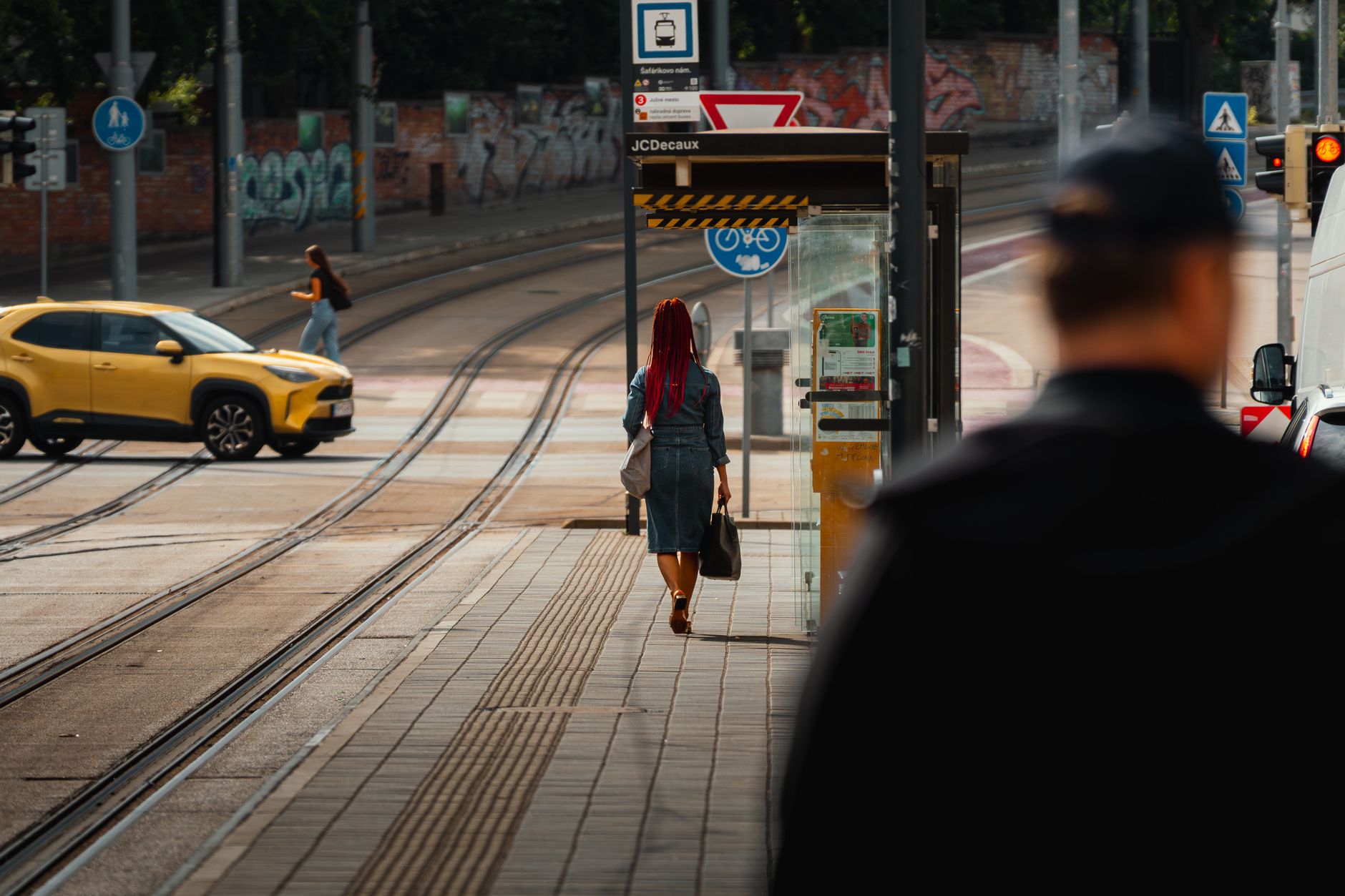
Leipzig runs seven municipal park-and-ride sites, and not one of them has a ticket machine. No barrier, no permit, no inspector asking to see your fare. The city states it the same way at every location: parking here is free of charge. Leipziger Verkehrsbetriebe (LVB) put it as an instruction rather than a rule — simply leave the car at one of these sites and take the tram or the bus into the centre.
That sounds unremarkable until you set it against the rest of Germany. In Cologne the space is free too, but it is tied to a valid ticket and a 24-hour maximum, both written into a contract and backed by a €30 penalty. In Hamburg the space itself carries a charge. In Frankfurt use now hangs on a subscription product of its own. Leipzig dispenses with all of it — and can afford to, because the engine of the system is not standing on the car park. It is running twenty metres beneath the city centre.
The City Tunnel is why this works at all
The City Tunnel opened on 15 December 2013, closing the north-south gap between the two historic terminus stations, the Hauptbahnhof and the Bayerischer Bahnhof. Four underground stations sit on the route — Hauptbahnhof, Markt, Wilhelm-Leuschner-Platz and Bayerischer Bahnhof — each with an island platform, the platforms lying between 17 and 22 metres down. Commissioning it reorganised regional rail across central Germany wholesale: six S-Bahn lines have run through it on a dense, integrated clockface timetable ever since.
For park and ride that has a consequence which is easy to miss. In a city built around a terminus station, the regional train stops at the edge of the centre and everyone changes. In Leipzig the same S-Bahn you board at Markkleeberg, Schkeuditz or Wurzen carries straight on beneath the Markt. The change that park and ride demands is therefore the only one on the whole journey — car to train, and nothing after that. That property is precisely what makes a free offer sustainable: the city does not have to buy the modal shift with a discount, because the shift is already the faster option. For the older version of the same idea, the account of how the lines run from Frankfurt Airport through that city’s tunnel into the centre shows the pattern in its established form.
Seven sites, around 3,130 spaces
The city of Leipzig operates seven park-and-ride locations of its own. All are open around the clock, all free of charge (as of 2026):
| Site | Spaces | Connection | Low-emission zone |
|---|---|---|---|
| Leipziger Messe | 1,200 | Tram 16, S-Bahn, RE13 | outside |
| Völkerschlachtdenkmal | 600 | Tram 15, S-Bahn | inside |
| Lausen | 400 | Tram 1 | outside |
| Schönauer Ring | 350 | Tram 8, Tram 15 | inside |
| Plovdiver Straße | 300 | Tram 15, S-Bahn Miltitzer Allee | outside |
| Krakauer Straße | 250 | Tram 1 | outside |
| Knauthain | 30 | Tram 3 / 3E | inside |
Two things stand out. First the westward tilt: Lausen, Krakauer Straße and Plovdiver Straße all sit in Grünau and between them intercept 950 spaces’ worth of the traffic arriving via the A9 and the Lützner Straße. Second the hole in the east and the north — apart from the Messe and the Völkerschlachtdenkmal there is simply nothing out there.
The numbers themselves do not quite agree, either. The open data register kept by the city’s roads and transport office lists Lausen at 450 spaces rather than 400, Krakauer Straße at 200 rather than 250, and splits the Völkerschlachtdenkmal into two areas of 261 and 340. The totals match almost to the space — 3,131 against 3,130 — while the distribution does not. Read any individual capacity as an order of magnitude, then, not as a promise.
What park and ride in Leipzig costs: the fare, and nothing else
Because the space is free, the fare is the entire price. Leipzig sits in MDV fare zone 110, and for a journey from the edge of the city into the centre that is the only zone you need (as of 2026):
| Ticket, fare zone 110 | Price |
|---|---|
| Single ticket, one hour | €3.80 |
| Single ticket, child (6–14) | €1.70 |
| Four-journey ticket | €15.20 |
| 24-hour ticket Plus, 1 person | €9.70 |
| 24-hour ticket Plus, 2 people | €14.80 |
| Deutschlandticket (nationwide) | €63.00 |
The two-person 24-hour ticket covers up to three children aged 6 to 14 as well. A family of four therefore travels all day for €14.80, parking included — the point at which Leipzig becomes unbeatable against any city-centre car park. For a lone commuter the better bet is LeipzigMOVE+ or ABO Flex: a base charge of €7.50 a month cuts the single fare to €1.90, which pays for itself from the fifth journey onwards. And anyone holding a Deutschlandticket pays literally nothing more for park and ride in Leipzig.
The taxi comparison is worth making properly rather than rhetorically. A German local tariff opens with a flagfall in the low single digits and then meters by the kilometre — how those tariff components interact is easiest to follow from the structure itself. For a run from Grünau into the centre, the resulting figure bears no relation to €3.80.
The Messe: the car park people mean, and the one they pay for
Searching for park and ride at the Leipzig trade fair turns up two entirely different car parks, and the difference costs twelve euros. What is usually meant is the municipal park-and-ride site at Georg-Herwegh-Straße 4, beside Leipzig Messe station: 1,200 spaces, open around the clock, free, step-free and with a toilet. S-Bahn lines S2, S5, S5X and S6 call there on platforms 1 and 3, the RE13 takes ten minutes from platform 1 to the Hauptbahnhof (lower level), and tram 16 runs into town from stand A.
The other car park belongs to Leipziger Messe itself. Visitor car parks P1 and P2 at the exhibition grounds cost €12 a day on trade-fair days, €10 from 2 p.m.; at public fairs €10 and €8 respectively, with premium parking at the CCL at €14. A new parking day begins at 4 a.m., the barrier reads your number plate, and you pay at a machine, by QR code, or online up to 48 hours later.
The decisive detail is one many visitors only notice at the turnstile: admission to many Leipzig fairs includes free travel within MDV fare zone 110. Buy online and you already hold the fare. Roughly 750 metres separate the Messe station from the exhibition grounds, and on event days a shuttle bus runs to the main entrance as well. A free space plus a fare already paid, against €12 at the grounds — that is not a close call.
The same park-and-ride site is about to change visibly. Since the groundbreaking on 9 September 2026, photovoltaic carports carrying more than 2,100 solar panels are going up over 330 of its spaces, designed for 915,000 kilowatt hours a year and around 335 tonnes of avoided CO₂, funded with two million euros from the Free State of Saxony. Expect a quarter of the site to be disrupted while the work runs.
Stötteritz: the site people search for, which does not exist
People look for a park-and-ride site at Stötteritz regularly, and the honest answer is that neither the city of Leipzig nor LVB nor the roads office’s own open register lists one. Leipzig-Stötteritz station is an obvious candidate — the S1 terminates there, the station sits on the eastern arm of the tunnel network, and anyone commuting in from the direction of Grimma or Wurzen passes it. A designated park-and-ride facility is not part of the package.
What the district does have is parking pressure. Stötteritz was the subject of a parking-management pilot as far back as 2020 and still appears in the expansion stages of Leipzig’s parking-management programme, without resident parking having been introduced there so far. Leaving a car on a Stötteritz street and stepping onto the S-Bahn is therefore not park and ride; it is relocating somebody else’s problem.
The workable alternative lies a little over a kilometre to the south: the Völkerschlachtdenkmal site, 600 spaces, reached from junction 32 Leipzig-Südost on the A38, with tram 15 running directly to the Hauptbahnhof and an S-Bahn station of its own alongside, where the city lists lines S1, S2 and S3. Anyone arriving from the east — the Dresden to Leipzig run, for instance, at 113 kilometres and not quite an hour and a half of driving — comes off the A14 at the Parthenaue interchange and lands there anyway.
The low-emission zone, live occupancy and the gaps in the network
Leipzig has had a low-emission zone since 1 March 2011, open only to vehicles carrying the green sticker, with no time limitation and regardless of the day’s air quality. It covers around 62 per cent of the municipal area. For choosing a site that means: the Messe, Lausen, Krakauer Straße and Plovdiver Straße lie outside it; Schönauer Ring, Völkerschlachtdenkmal and Knauthain lie inside. Drivers without a green sticker have four sites to choose from, and they happen to sit exactly where the motorways come in.
Before setting off, check the occupancy display. The city runs a park-and-ride dashboard and publishes the same figures as an open dataset refreshed every five minutes; the LeipzigMOVE app shows them too. On an ordinary Thursday afternoon in September 2026, Lausen was 41 per cent full, the Messe 25 per cent, Plovdiver Straße 12 and Schönauer Ring 3 — overcrowding is visibly not Leipzig’s park-and-ride problem. Two caveats temper the reading: at Schönauer Ring and the Völkerschlachtdenkmal only part of the area is instrumented, for technical reasons, and individual counters occasionally report nothing at all.
Beyond the city boundary the Central German Transport Association fills in around the edges: Schkeuditz with 103 spaces on the S3, Markranstädt with 63, Markkleeberg-Großstädteln with 58, Engelsdorf with 50, Taucha with 34, Rackwitz with 24 and Schkeuditz-West with 19 — all likewise free and open around the clock. These are small sites, but they sit in the right places, which is to say where the regional train picks up the tunnel. A network whose larger sites lie outside the core city is not a Leipzig peculiarity, incidentally; around Nuremberg the same pattern is more pronounced still.
One caveat to close on, because Leipzig invites it more than most. A free space with no published maximum stay is still not a holiday car park. The S5X links Leipzig/Halle Airport to the city by way of the Messe station, and the temptation to leave a car standing free for a fortnight is obvious. These are unstaffed surface car parks, partly unlit, intended for a day’s use; anyone flying will find the proper options under parking at Leipzig/Halle Airport, and how much time to allow at the terminal is set out in a guide to the security checkpoint.
What remains is a system simple enough to grasp in a sentence and therefore easy to underrate. Leipzig gives the space away without asking anything in return and underwrites the rest with a tunnel that makes the ride short enough to need no further incentive. The weakness of the model is not its price but its geography: seven sites for a city of more than 600,000 people is thin, and in the east and the north the offer is simply missing. For how other cities solve the same problem by entirely different means, see the comparison under park and ride in Germany; every other location is listed under Park & Ride.
Keep reading
Park & Ride
Park and Ride in Cologne: Free Parking, but Only With a Ticket
Park and ride in Cologne in 2026: 24 KVB sites, around 5,400 spaces, parking free of charge — with a valid ticket and for no more than 24 hours. Fares, Weiden West, Porz and the low-emission zone.
Dr. Eva Sommer17 September 2026
Park & Ride
Park and Ride Nuremberg: 645 City Spaces, 300 Across the VGN
Park and ride in Nuremberg 2026: six city sites with 645 spaces, 300+ across the VGN network – mostly free, with app routing rather than a ticket machine.
Dr. Eva Sommer5 August 2026
Park & Ride
Park and Ride Stuttgart: 215 Sites Between the Basin and the Fildern
Park and ride in Stuttgart 2026: 215 sites with roughly 17,370 spaces across the VVS network, a six-month subscription instead of a day ticket – and why the city's basin shapes where it all sits.
Dr. Eva Sommer11 August 2026
Park & Ride
Park and Ride Munich: 38 City Sites, Three Price Levels, Day Rates from €1
Park and ride in Munich in 2026: the 38 sites of the city-owned P+R Park & Ride GmbH with more than 14,000 spaces, day rates of €1.00 to €2.00, which U-Bahn and S-Bahn lines they serve, the standard rate for non-travellers, and how it compares with parking in the centre.
Dr. Eva Sommer25 September 2026
Park & Ride
Park and Ride Frankfurt: 2,152 Spaces for 463,000 Commuters
Park and ride in Frankfurt in 2026: 13 sites, 2,152 spaces for 463,000 daily commuters – and the first real expansion since 1996, tied to the RMV ticket.
Dr. Eva Sommer9 July 2026