Parking in Central Munich: Garages, Residents' Zones and the Low-Emission Zone
In Munich's old town an hour at the kerb costs €2.50 and has done for more than twenty years. In the garage beneath the Rindermarkt it costs €6.50. In between lie a web of residents' zones, a low-emission zone with its own diesel ban, and a handful of car parks that cost less than their addresses suggest.

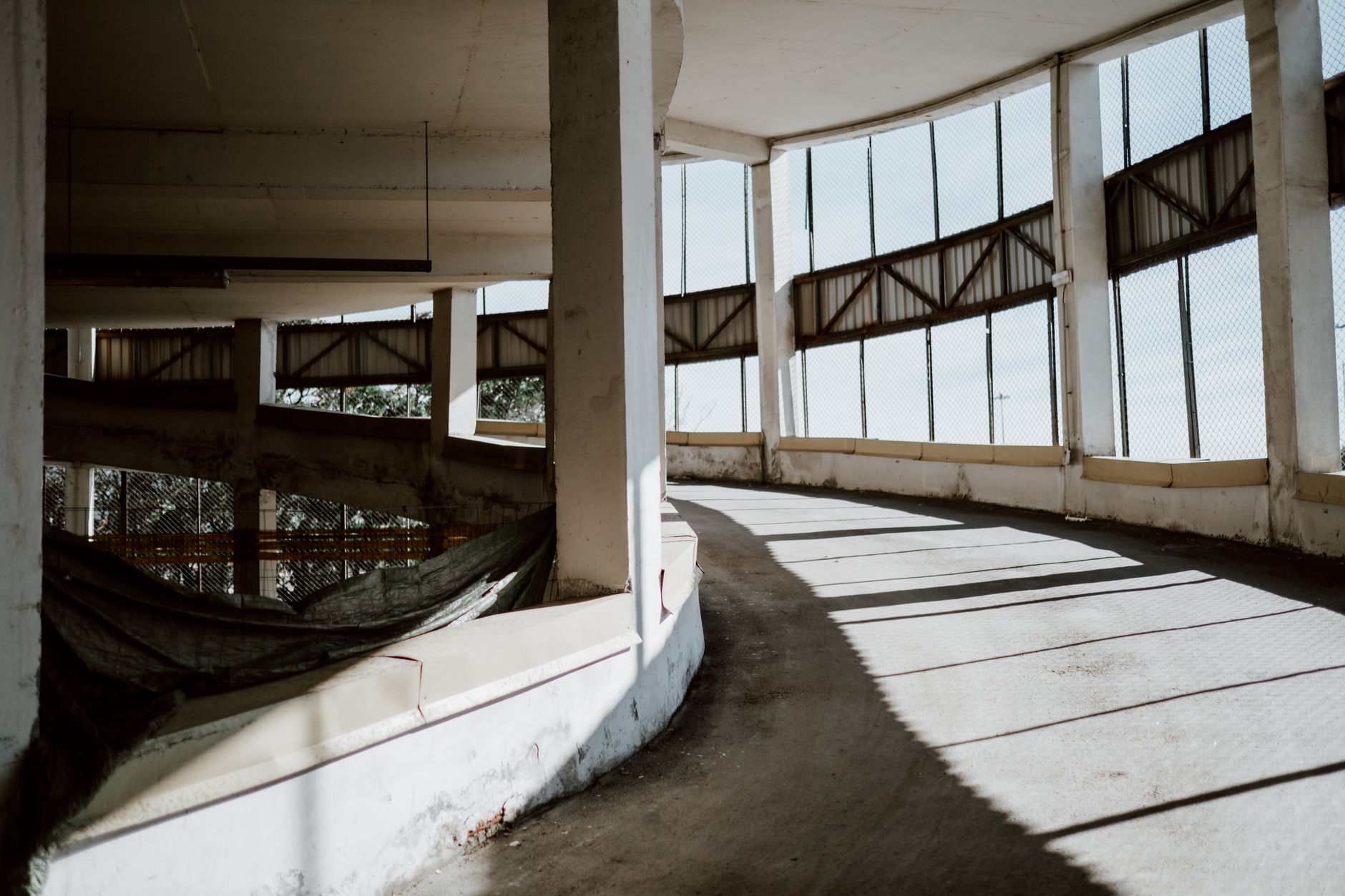
Drive into Munich’s old town for the first time and it quickly becomes clear that it was not designed with you in mind. The centre between Karlsplatz, Marienplatz, Odeonsplatz and the Isartor is largely pedestrianised, enclosed by the Altstadtring, the inner ring road, from which individual ramps lead down to the garages. There are kerbside spaces, but not many, and all around them begin the residents’ parking zones, where the city reserves scarce space above all for the people who live there.
Parking in central Munich therefore runs on two systems worth keeping apart. One is public and municipal: pay-and-display machines, residents’ permits, a fee ordinance. The other is private: garages and multi-storeys with their own tariffs, which differ by more than a factor of two for similar locations. Over both sits a question of access that is stricter in Munich than in most large German cities.
The low-emission zone starts at the Mittlerer Ring and includes it
Munich’s low-emission zone covers the Mittlerer Ring, the middle ring road, and everything inside it. That the ring road itself is included is the first peculiarity. In Frankfurt the motorways bound the zone without belonging to it; in Munich you are inside the zone as soon as you are on the ring. Vehicles need a green sticker to enter.
The second peculiarity is an additional ban. Since 1 February 2023, diesel vehicles meeting Euro 4 or worse have been barred from the zone and the ring road, even if they carry a green sticker. Signs exempt residents and delivery traffic, and there are further exemptions for people with certain disabilities, tradespeople with a trade parking permit and some other groups. According to the German motoring club ADAC, a breach costs a €100 fine, or around €128.50 once fees and expenses are added (as of 2026).
The city itself points out that the green sticker with the number 4 is not the same thing as the emissions standard: a modern Euro 6 diesel carries it too. What counts is field 14 in the vehicle registration document. If you drive an older diesel and none of the exemptions applies, the only practical way into the centre is by train or bus. The city explicitly recommends park and ride for this, and how Munich’s network of 38 city-run sites works is explained in our guide to park and ride in Munich.
At the kerb: €2.50 in the old town, €2.00 everywhere else
Munich’s parking-fee ordinance, in force in its current form since September 2023, has only two rates. Rate 1 is €0.50 per twelve minutes or part thereof, which is €2.50 an hour; rate 2 is €0.10 per three minutes or part thereof, which is €2.00 an hour.
In the old-town parking zone, rate 1 applies from 08:00 to 23:00 and rate 2 the rest of the time. In the main-station zone, rate 1 applies. Everywhere else rate 2 applies, and on stretches of street without a signed maximum stay the daily charge is capped at €11.00. Pay by app and you are billed not in twelve- or three-minute blocks but by the minute. The ordinance does not set the maximum stay itself; that is on the signs and the machine, and in the old town it is short.
What stands out is the stability. According to Munich press reports, the €2.50 in the old town has not changed in more than twenty years. That may change. The savings package the governing coalition at city hall presented in 2026, in response to strained finances, includes raising the charge in the residents’ zones from €2.00 to €2.60 an hour. As far as I could establish when this went to press in September 2026, it had not yet been adopted; the city council still has to approve it. A glance at the machine, in other words, beats any table.
By comparison, Munich’s kerbside is almost cheap. In central Frankfurt an hour costs €4, and that hour is also the maximum stay, as our guide to car parks in central Frankfurt explains. In Munich the problem is not price but availability.
Residents’ zones: 77 of them, around 100,000 spaces
Around the old town, Munich has reorganised its parking wholesale. Since summer 2026 there have been, according to the city, 77 residents’ parking zones (Parklizenzgebiete), plus the special zones for the old town and the main station, the Domagkpark and the Messestadt Riem: in all, around 100,000 managed spaces (as of July 2026).
The principle is simple; the signs less so. Residents with a permit park free and without time limit on almost every space in their zone. The permit costs an administrative fee of €30 a year. The Bavarian ceiling is €30.70, and requests from several cities to raise it have so far not been taken up by the state interior ministry. Visitors may park with a ticket during the day, but not everywhere. There are residents-only spaces, mixed spaces where both groups may park, and short-stay spaces with tight time limits, often with rules that change with the time of day. For visitors that means reading every sign, including the supplementary plate underneath.
By law, a residents’ zone may not measure more than 1,000 metres on the diagonal. That is why new zones are created rather than existing ones extended, and why in some districts the rules change literally at the next junction. Two things the city now explicitly refuses to tolerate: parking on the pavement, even with two wheels, where it is not expressly allowed, and parking that leaves less than three metres of carriageway free.
How another big city handles the same job, with visitor rates of €1 to €3 an hour and a residents’ permit that at €20.40 for two years is even cheaper than Munich’s, is shown in our guide to Berlin’s parking zones.
E number plates: three free hours, but not everywhere
Vehicles with an E number plate, meaning battery-electric cars, plug-in hybrids and fuel-cell vehicles, have since 1 April 2025 been allowed to park free for up to three hours on managed public spaces throughout Bavaria. Munich’s fee ordinance still says two hours; the Bavaria-wide rule now takes precedence, and the city refers to it too. A parking disc is enough, or you can use the Handyparken app, which deducts the free hours automatically and then starts a normal ticket.
The limits are tight. The exemption does not apply in residents-only areas, in garages and multi-storeys, or at park-and-ride sites, and it does not override the signed maximum stay.
The old-town garages: from €3 to €6.50 an hour
Stay longer than a quick errand and you will end up in a garage. The differences between them are greater than the short distances between them would suggest.
| Garage | Address | Spaces | Per hour | Daily maximum | Height limit |
|---|---|---|---|---|---|
| Tiefgarage Marienplatz (Contipark) | Rindermarkt 16 | 247 standard | €6.50 | €45.00 | 1.80 m |
| Tiefgarage Oberanger (Contipark) | Oberanger 27 | 343 standard | €6.50 | €45.00 | 2.00 m |
| City-Parkhaus (MÜHOGA) | Färbergraben 5 | 400 | €4.00 | €32.00 | n/a |
| Tiefgarage Hauptbahnhof Süd P4 (Contipark) | Senefelderstraße 7 | 242 | €3.30 | €32.00 | 2.00 m |
| Tiefgarage Neue Hopfenpost (Contipark) | Hopfenstraße 6 | 583 | €3.00 | €17.00 | 1.95 m |
As of 2026, according to the operators. The Marienplatz garage is the closest to the town hall and the Viktualienmarkt, but with a 1.80-metre height limit it is too low for many SUVs with roof rails and for any van. The Oberanger garage in the Hackenviertel near the Sendlinger Tor charges the same standard rate; holders of the operator’s Pcard get a lower daily cap of €28.00 there, and extra-wide bays are available as premium parking at €7.50 an hour.
The City-Parkhaus on Färbergraben is the real find on this list: thirty metres from the Hofstatt, 270 metres from Kaufingerstraße, 500 metres from the Viktualienmarkt, and at €4.00 an hour and €32.00 for 24 hours markedly cheaper than the Contipark garages round the corner (tariff list of 1 April 2026). It is, however, open only from 07:00 to midnight, and on Sundays and public holidays you cannot pay in cash.
Beneath the Stachus, at Herzog-Wilhelm-Straße 11, lies one of the largest garages in the centre, with around 700 spaces and, at 2.20 metres, one of the higher entrances. I was unable to verify a current tariff reliably with the operator, so the sign at the entrance is what counts. The same goes for the listed Parkgarage am Salvatorplatz near the Odeonsplatz, which has a height limit of about two metres.
At the main station the prices step down. The Süd P4 garage charges €3.30 an hour and €32.00 a day, and the Neue Hopfenpost on Hopfenstraße, at €3.00 an hour with a daily cap of €17.00, has by far the cheapest all-day rate in this line-up. The catch: according to the operator it opens Monday to Saturday from 06:30 to 21:00, and Marienplatz is a good kilometre and a half away.
An evening at the opera
For an evening at the Bavarian State Opera or the Residenztheater, the Operngarage beneath Max-Joseph-Platz is the obvious address. Under the operator’s most recently published price list (dated August 2022), an hour costs €4.00, a day €32.00, and a flat night rate of €13.00 applies from 18:00 to 09:00 the next morning. You can drive in until 01:00 and drive out at any time. Whether the 2022 figures still apply is worth checking on the sign at the entrance.
If there are two of you going to the opera and on to dinner afterwards, it is worth working out what getting home without your own car would cost. What a Munich cab costs, from the base fare to the per-kilometre rate, is set out in the guide to taxi fares in Munich. For short trips with two people the sums can hold up, and they spare you the drive through the low-emission zone.
One Saturday in town, costed three ways
Take a shopping Saturday: five hours in the old town, one person.
In the Marienplatz garage that costs 5 × €6.50 = €32.50. In the City-Parkhaus on Färbergraben it is 5 × €4.00 = €20.00, from an almost identical location. At the Neue Hopfenpost by the main station it is 5 × €3.00 = €15.00, plus a walk or a short train ride. And with park and ride from Fröttmaning, parking plus a single-person day ticket for zone M comes to €11.60 (as of 2026).
Between the dearest and the cheapest central option, then, lies €12.50 for the same afternoon, and the difference comes almost entirely from the choice of operator, not of location. That is the one decision worth making before you set off.
For day visitors from further afield, say from Franconia, parking is often a smaller question than the journey itself. How long the drive really takes can be checked on the Munich to Nuremberg route with distance and drive time; over that distance, the train can settle the parking question altogether. And if you want to compare the overall cost of a city weekend, the breakdown of what a weekend in Frankfurt actually costs offers a yardstick against which a Munich weekend can be measured.
Driving into town from the airport in a hire car
Many people who drive into central Munich have not come from home at all but from the airport, in a hire car. The same rules apply to them as to everyone else. A car from a current rental fleet will as a rule meet the low-emission requirements; the open question is more where it will spend the night, and whether a car is needed for a city stay at all. Where the hire-car desks are in the Munich Airport Center and how to reach them from arrivals is described in the guide to arriving at Munich Airport. If, conversely, you are collecting someone from the airport, the short-stay tariffs are set out in our guide to Munich Airport short-stay parking.
Where I would park in Munich
For a quick errand in central Munich I would look for a kerbside space, pay by app to the minute, and read every supplementary sign. For a longer stay I would not take the garage nearest my destination but the City-Parkhaus on Färbergraben, as long as I was back before midnight, or the Neue Hopfenpost for a whole day. And on any day when I was staying several hours regardless, I would think seriously about leaving the car at the edge of town.
Munich does not make life comfortable for drivers, but it does make it predictable: a fee ordinance with two rates, residents’ zones with clear rules, and a low-emission zone whose boundary begins at the ring road. The real variable is the garages, and there a look at the price board decides more than any lap of the block. All figures are as of 2026; the signs on site and at the kerb take precedence.
Keep reading
City Parking
Parking in Central Cologne: Cathedral Car Parks, Kerbside Rules and the Low-Emission Zone
Parking in central Cologne in 2026: what the garages at the cathedral, Heumarkt and the opera charge, €4 an hour at the kerb, the €5 all-day spaces, residents' permits from €100 and the low-emission zone.
Dr. Eva Sommer25 September 2026
City Parking
Parking in Central Düsseldorf: Altstadt, Kö and Rhine Embankment Compared
Parking in central Düsseldorf in 2026: what the garages at the Rhine embankment, Grabbeplatz, Carlsplatz and the Kö charge, €4.50 an hour at the kerb until 10pm, the low-emission zone, residents' permits before the rise, and the Altstadt on weekend nights.
Dr. Eva Sommer25 September 2026
City Parking
Parking in Central Stuttgart: Car Parks, New Charges and the Diesel Ban
Parking in central Stuttgart in 2026: €6.40 an hour at the city-centre kerb from 1 October, municipal garages at €3.80, cheaper state-owned car parks, residents' permits at €55 and where the diesel bans stand.
Dr. Eva Sommer25 September 2026
City Parking
Car Parks in Central Frankfurt: Tariffs, the Green Sticker and the One-Hour Rule
Parking in central Frankfurt in 2026: tariffs at Hauptwache, Goetheplatz, Alte Oper, Dom/Römer, the main station and Skyline Plaza, the low-emission zone, and why kerbside parking stops after sixty minutes.
Dr. Eva Sommer17 September 2026
City Parking
Parking in Dresden: €6 a Day at the Semperoper, €28 on the Altmarkt
Parking in Dresden in 2026: the city's three charging zones, the old-town car park ring from €6 to €30 a day, the Äußere Neustadt charged until midnight, and why the Elbe meadows are off limits.
Dr. Eva Sommer17 September 2026