Free Parking in Hamburg: Sunday Is the Exception, Not the Rule
The rule everyone repeats — that parking in Hamburg is free on Sundays — holds in twelve of the city's 62 resident parking zones. In 49 of them charging is explicitly set as daily, and around the Reeperbahn it runs until two in the morning.

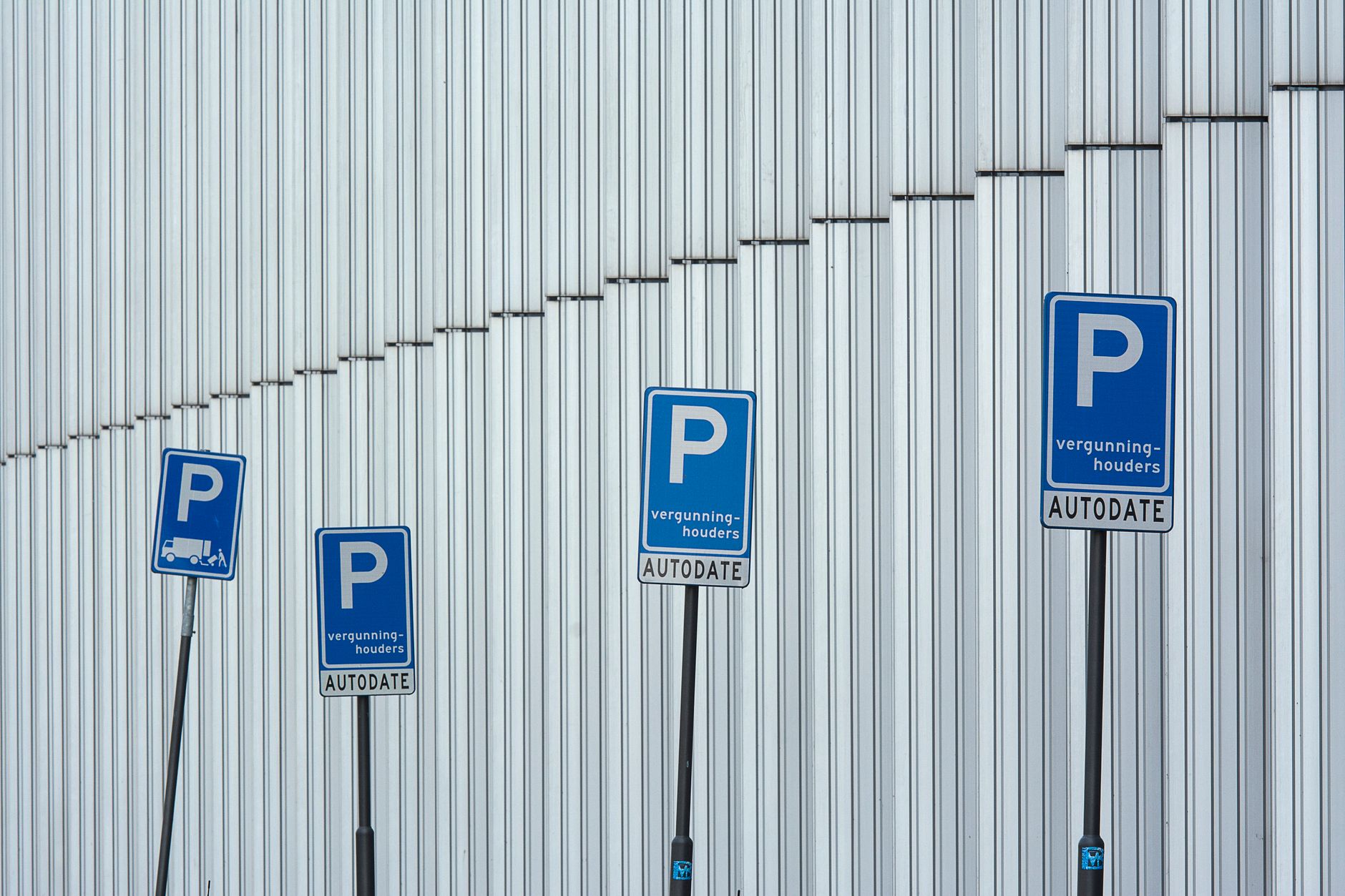
“Free parking in Hamburg” is a search with an uncomfortable answer. The honest reply is not a list of insider spots. It is that in precisely the districts where you want to leave the car, free parking now exists mainly outside the charging hours — and when those hours end varies from zone to zone.
So rather than working through the lists that circulate, I went to the official geodata published by the Landesbetrieb Verkehr (LBV), Hamburg’s transport authority, covering every resident parking area. It records, for each polygon, the charging hours, the form of management and the maximum stay. What comes out of it contradicts the rule of thumb that gets repeated most often.
Sixty-two zones, 146 separate areas
As of 2026 the dataset lists 62 coded resident parking zones, split into 146 individually described areas. The codes give away the borough: A and AE for Altona and the Altona–Eimsbüttel fringe, E for Eimsbüttel, M for Hamburg-Mitte, MA for St. Pauli, N for Hamburg-Nord.
That split into sub-areas is not a quirk of the data; it is the heart of the matter. Within a single zone there are stretches that additionally sell a day or week ticket, stretches reserved for short stays with no resident privilege at all, and so-called overlap areas where permits from several neighbouring zones are valid. The LBV describes its own dataset by saying management is “mostly monetary plus time-based”, and “less often on a purely time basis”.
If you are looking for one sentence that holds true across Hamburg, you will not find it. That is the finding, not an evasion.
Free on Sundays? Twelve zones, not the city
This is where most guides go wrong.
Count the charging hours across all 62 zones and the picture is unambiguous: in 49 zones the charge is set as “daily”. Twelve zones are managed on working days only, and in a thirteenth (N 107) that applies to one sub-area alone.
The distinction is exactly the one that matters. Under German road traffic law, werktags — working days — means Monday to Saturday. Saturday counts; Sundays and public holidays do not. Where a sign says werktags, Sunday genuinely is free. Where it says täglich, it is not.
The twelve Sunday-free zones cluster noticeably. N 109 Hofweg, N 110 Feenteich, N 111 Uhlenhorster Weg, N 112 Schwanenwik, N 113 Lübecker Straße and M 111 Borgfelde form a belt around Uhlenhorst, Hohenfelde and Borgfelde. To those add M 103 Kontorhausviertel, M 104 Gothaer Weg, M 105 Billstedt Zentrum, M 106 Kirchlinden, and in Altona A 109 Altonaer Kinderkrankenhaus and A 110 Röhrigstraße.
That is the complete list. Four out of five Hamburg resident parking zones charge on Sundays as well. Turn up in Eimsbüttel, Ottensen or the Sternschanze on a Sunday morning trusting a habit picked up in another city, and you will pay for it.
When the evening actually starts
The second variable is the hour, and it scatters even more widely.
The LBV’s own FAQ says charging “usually falls within the period from 9:00 to 20:00, though this can differ in certain areas”. Quite how far it differs only becomes visible in the data.
| Charging hours | Zones |
|---|---|
| daily 9am–8pm | 26 |
| daily 9am–10pm | 13 |
| working days 9am–8pm | 12 |
| daily 9am–2am | 4 |
| daily 9am–midnight | 3 |
| other (8am–midnight, 10am–8pm, mixed) | 4 |
The four zones running until 2am are MA 201 Wohlers Park, MA 202 Paulinenplatz, MA 203 Spielbudenplatz and MA 204 Hein-Köllisch-Platz — St. Pauli, around the Reeperbahn. Free parking there has shrunk to the seven hours between two and nine in the morning, every day of the week.
The meter runs until midnight in A 100 Sternschanze, M 101 Schaarmarkt and M 107 Karolinenviertel, and at M 100 Großneumarkt it starts at eight. In the other direction, A 108 Neumühlen is the single zone where charging does not begin until ten.
The practical value of that table is that it inverts the usual question. The useful thing to ask is not “where is it free” but “from what time is it free here” — because outside the posted period, on the LBV’s own wording, parking in resident zones is open to everyone without a visitor permit.
What central parking costs
To give the alternative a number: Hamburg raised its parking charges across all four tariff zones during 2026 (as of 2026).
| Tariff zone | before | now |
|---|---|---|
| Zone 1 | €3.50 | €4.00 an hour |
| Zone 2 | €3.00 | €3.50 an hour |
| Zone 3 | €2.50 | €3.00 an hour |
| Zone 4 | €1.50 | €2.00 an hour |
Four euros an hour in the core zone is what you should budget for in the centre: an afternoon from 2pm to 7pm costs twenty euros. On top sits the maximum stay, recorded in the dataset as 180 minutes for most zones and 120 minutes in M 102 Cremon and M 103 Kontorhausviertel. Past three hours, in other words, your constraint is not the money but the order itself.
You can pay at the machine or by phone; the LBV notes that mobile parking is billed “almost to the minute”, which on a tightly judged hour is the difference between two euros and three. Anyone wanting to weigh that against the alternative before setting off will find the counter-calculation in what a taxi ride in Hamburg actually costs, which tips towards the taxi more often than people expect.
Resident permits: €70 a year, and what they do not buy
For residents the problem dissolves, though at a price that now sits at the upper end for Germany.
A resident parking permit costs €70 a year applied for online, €90 applied for in person (as of 2026), raised during 2026 from €65 and €70 respectively. It is valid for one year from issue. A change — new registration plate, a move to a different zone — costs €10, and a trade exemption €250 a year.
The permit waives the charge and the maximum stay, but only within the zone written on it. With 62 zones across the city, that means you are paying again two streets away. Only in the overlap areas mentioned above are permits from several neighbouring zones valid.
For guests there is a visitor permit, at €4.00 a day in zones I and II and €3.00 in zones III and IV.
Berlin makes the instructive comparison: the same permit there costs €20.40 for two years — roughly a fourteenth of Hamburg’s annual price, but with a processing time measured in months, as I set out in Berlin parking zones.
The seven zones where nobody feeds a machine
Now the part closest to the original search, and it is a short one.
In seven zones the management is purely time-based: no ticket machine, a parking disc instead, and a maximum stay of 180 minutes. They are N 100 Flughafen, N 101 Flughafenstraße, N 102 Bergkoppelweg, N 103 Etzestraße, N 104 Ahronkamp, N 105 Ohlendörp and M 104 Gothaer Weg.
Six of them sit around Fuhlsbüttel airport, which is precisely why a misunderstanding is waiting here. Three hours on a disc is excellent news if you are collecting someone — in which case it is worth checking when the aircraft actually lands rather than stretching the window. What these streets are not is a substitute for a parking space during a trip; leave a car there for a week and you are simply in the wrong place. What a week at the airport really costs is set out under Hamburg Airport long-stay parking.
What the lists of free spaces are worth
Those lists are rarely invented. They are usually just out of date.
A street that was free in 2019 may now sit inside a zone created in 2023 — the areas around Uhlenhorst, Hohenfelde and Borgfelde came about exactly that way. The lists carry no date; the signs do. The LBV attaches an explicit caveat to its own data: what governs is the formal order, the signage on site and the road traffic regulations.
What the lists also tend to omit is the category these spaces actually belong to: private land. The car park outside the supermarket is free, but it is not public highway, and what you risk there is not a police fine but a contractual penalty — a distinction I set out in parking at the supermarket.
And the obvious candidate is missing too. Hamburg’s park-and-ride sites are not free. A day ticket costs two euros and use is tied to continuing your journey on HVV public transport; the arithmetic is under park and ride in Hamburg.
The calculation that does work
If free parking barely exists in the inner city, the question becomes what replaces it. Three answers survive the arithmetic.
Shift the hour, not the place. In 26 zones charging stops at 8pm. A dinner starting at half past seven costs you half an hour of parking rather than four hours of it. That is the single most effective saving available, and it requires no detour at all.
Take the edge seriously. The 62 zones cover the dense districts, not the area of the city: two S-Bahn stops further out, much of the kerbside is unmanaged. The walk you are trying to avoid is, in the centre, the shortest part of the journey anyway.
Cost the whole trip. If you are coming in from the surrounding region, treat the drive and the parking as one figure; for a route such as Hamburg to Lübeck you can check the distance and driving time in advance, and only that total is comparable with a transport ticket. A similar whole-trip reckoning for a city weekend, including the items people forget when they think about parking, appears in what a weekend in Frankfurt costs.
All figures are as of 2026 and rest on the Landesbetrieb Verkehr’s own publications; zones, hours and tariffs are revised continually, and the sign on the street takes precedence over any table. What holds independently of all that: free parking in Hamburg is not a place but a time window. Accept it and you stop hunting for insider spots — you read the sign and arrive half an hour later. Other cities handled the same way are collected under city parking.
Keep reading
City Parking
Berlin Parking Zones: €20.40, but a 16-Week Wait
Managed parking in Berlin: €1 to €3 an hour, a resident permit at €20.40 for two years — and new zones in Friedrichshain-Kreuzberg during 2026.
Dr. Eva Sommer15 August 2026
City Parking
Parking in Erfurt: Day Tickets, Zones and the Edge of Town
Parking in central Erfurt in 2026: €15 a day at the Domplatz car park, the city's charging zones, and when park and ride is the better answer.
Dr. Eva Sommer13 August 2026
City Parking
Parking in Dresden: €6 a Day at the Semperoper, €28 on the Altmarkt
Parking in Dresden in 2026: the city's three charging zones, the old-town car park ring from €6 to €30 a day, the Äußere Neustadt charged until midnight, and why the Elbe meadows are off limits.
Dr. Eva Sommer17 September 2026
City Parking
Parking in Central Munich: Garages, Residents' Zones and the Low-Emission Zone
Parking in central Munich in 2026: what garages from Marienplatz to the main station charge, €2.50 an hour on the old-town kerb, 77 residents' parking zones, three free hours for electric cars and the diesel ban on the Mittlerer Ring.
Dr. Eva Sommer25 September 2026
City Parking
Car Parks in Central Frankfurt: Tariffs, the Green Sticker and the One-Hour Rule
Parking in central Frankfurt in 2026: tariffs at Hauptwache, Goetheplatz, Alte Oper, Dom/Römer, the main station and Skyline Plaza, the low-emission zone, and why kerbside parking stops after sixty minutes.
Dr. Eva Sommer17 September 2026