Car Parks in Central Frankfurt: Tariffs, the Green Sticker and the One-Hour Rule
In the charged city-centre zone an hour at the kerb costs four euros, and that hour is also the maximum you are allowed to stay. Which makes the car park question in Frankfurt not a matter of convenience but the only question there is — and the answer depends on where you want to end up on foot.

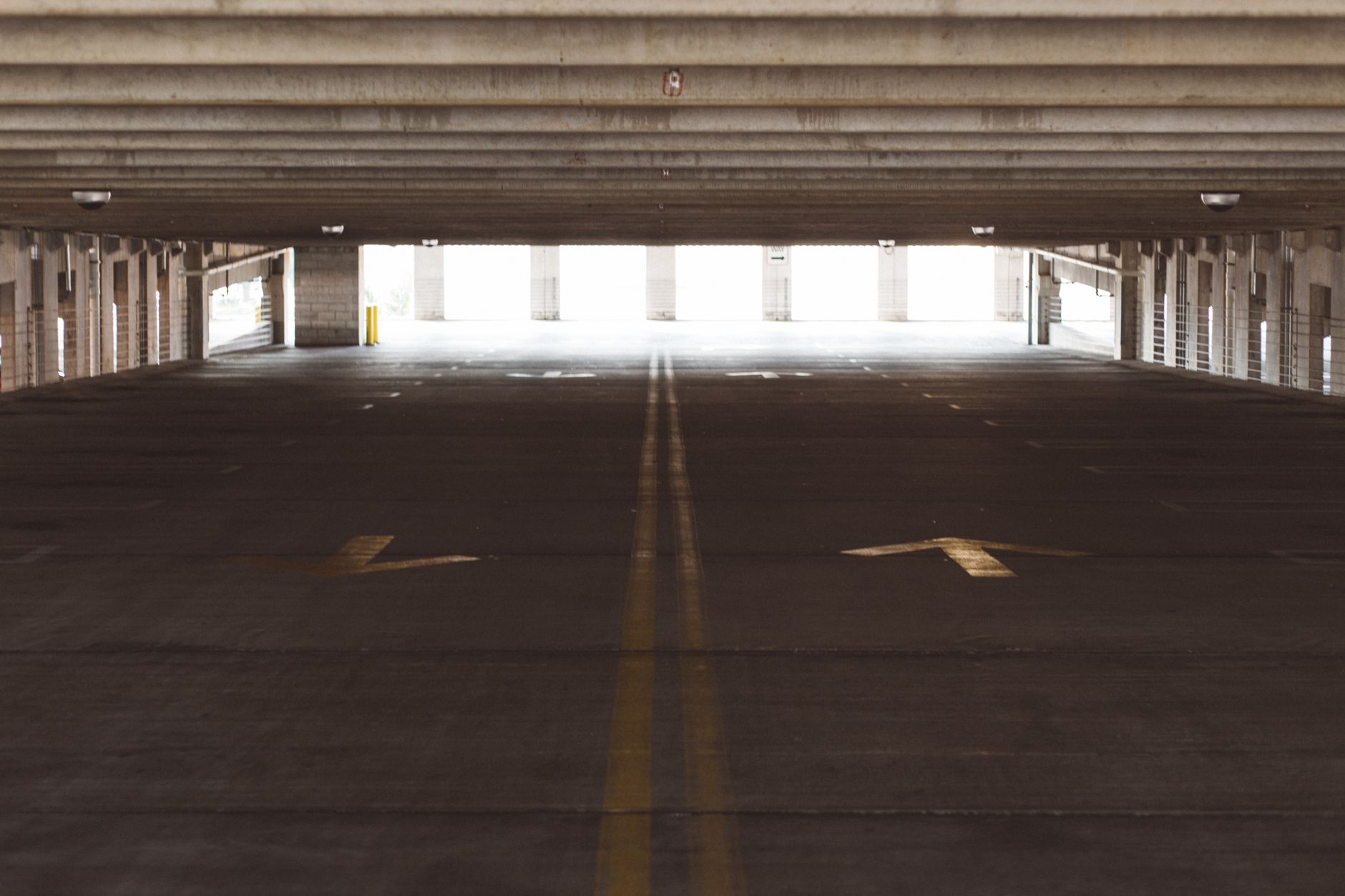
One figure decides almost everything about driving into Frankfurt, and it is rarely displayed where you would look for it. In the charged city-centre zone, an hour of kerbside parking costs four euros — and that single hour is simultaneously the maximum permitted stay (as of 2026). There is no second ticket, no extension and no quiet tolerance. Outside that zone the rate is two euros an hour, and for areas with no maximum stay — explicitly not the city centre — the city has introduced a twelve-euro day ticket.
The consequence regularly catches visitors out: anyone wanting to stay longer than sixty minutes in central Frankfurt simply has no legal kerbside option. A multi-storey car park here is not the more comfortable choice, it is the only one. The real decision is therefore not whether but which — and these garages differ in tariff, entrance height and opening hours far more than their proximity to one another suggests.
Without a green sticker you never arrive at all
Before the tariff question matters at all, there is a question of access. Frankfurt has operated a low-emission zone (Umweltzone) since 2008, and since 1 January 2012 only the green sticker is valid there. Yellow and red were phased out; entering without a valid sticker risks a fine of 100 euros.
The boundary is unusually generous, which is exactly why it gets underestimated: the zone covers the city inside the motorway ring, bounded by the A5 to the west, the A3 to the south and the A661 to the east and north. The motorways themselves form the edge and lie outside the zone — so you may drive around Frankfurt without a sticker, but not into it. That affects essentially every destination this piece discusses.
Two points cause most of the trouble in practice. First, foreign-registered vehicles need the same sticker — an EU registration does not substitute for one, and you cannot buy it at the city limits. Second, the vehicle requirement is lower than the reputation of German low-emission zones suggests: a diesel from Euro 4 and a petrol car from Euro 1 — in practice anything with a regulated catalytic converter — qualifies for green. Exemptions cover short-term, red and export plates, along with vehicles displaying the orange disabled parking permit.
If you are arriving in a hire car or a borrowed vehicle, this is the one minute worth spending: a glance at the windscreen before you set off.
Zeil and Hauptwache: the retail core and its three garages
The Zeil is Frankfurt’s shopping street, and its two ends — Hauptwache to the west, Konstablerwache to the east — are the addresses people search for most.
The Hauptwache car park sits at Kornmarkt 10, offers 303 spaces (16 of them with chargers on the fifth floor) and is open around the clock. On weekdays each hour begun costs EUR 2.50, on Sundays and public holidays EUR 0.50 per 30 minutes; between 7pm and 7am a night rate of EUR 4.00 applies, and the daily maximum is EUR 38.00 (as of 2026). The 2.00 metre entrance height is where estates with roof boxes and vans come unstuck.
At the eastern end stands the considerably larger Konstabler car park at Töngesgasse 8, with 809 spaces, a 2.10 metre clearance and a noticeably friendlier tariff: EUR 2.00 on weekdays and EUR 1.00 on Sundays and holidays per hour, EUR 4.00 overnight, daily maximum EUR 32.00. Roughly seven hundred metres of pavement separate Hauptwache from Konstablerwache along the Zeil. For a day’s shopping that is six euros of difference in the daily cap and half an hour of walking you were going to do anyway.
The most interesting pricing construction in the centre, though, sits between the two. The underground car park beneath the PalaisQuartier and the MyZeil shopping centre (Große Eschenheimer Straße 10–14) tiers its prices by parking level: on the top level A, connected straight into the mall, you pay EUR 5.50 an hour with a daily maximum of EUR 45.00, while levels B to D charge EUR 2.00 an hour with a EUR 20.00 daily maximum (as of 2026). Same building, same barrier, same escalator — and more than double the hourly rate for a few seconds of saved walking. Anyone who drives in and follows the signage blindly upwards has already made the day’s most expensive decision. From 9pm a flat night rate of EUR 5.00 applies on every level.
What you actually find in this quarter — from the Zeil through MyZeil to Skyline Plaza — is set out in this guide to Frankfurt’s shopping districts, which is the reading that tells you which end of the Zeil you want to emerge at in the first place.
Alte Oper and Goetheplatz: an expensive address with a cheap evening
The Opernplatz sits at the edge of the banking district, and the Alte Oper underground car park (Opernplatz 1) sits literally beneath it: 402 spaces, 20 with chargers, 2.10 metres of clearance, open continuously. Weekdays cost EUR 2.50 for each hour begun, Sundays and holidays EUR 0.50 per half hour, with a daily maximum of EUR 37.00.
The number that matters here is a different one: the night rate is EUR 6.00 and starts at 5pm, not at 7pm as in most other garages in the city. For a concert or theatre evening at the Alte Oper that is the decisive figure — switching two hours earlier than anywhere else into a flat rate that runs until 7am is the best offer central Frankfurt makes to an evening visitor.
A few hundred metres to the south-east, at the entrance to the designer boutiques of Goethestraße, lies the Goetheplatz car park (Goetheplatz 2a, entrance via Junghofstraße). With 591 spaces it is one of the largest in the centre, 33 of them with chargers, and again a 2.00 metre entrance height. The tariff matches Hauptwache: EUR 2.50 per weekday hour, EUR 0.50 per 30 minutes on Sundays and holidays, EUR 4.00 overnight from 7pm, daily maximum EUR 38.00.
The practical difference between the two is therefore not the hourly rate but the evening. Arrive before 7pm and stay late, and the Alte Oper wins; shop during the day and Goetheplatz puts you closer for the same money.
Dom/Römer: 1.95 metres, and no entry after midnight
For the reconstructed old town, the Römerberg and the museum embankment, the Dom/Römer underground car park (Domstraße 1) is the obvious address: 611 spaces, 46 with chargers, 20 family bays, and at EUR 2.00 on weekdays or EUR 1.00 on Sundays and holidays per hour, with a EUR 32.00 daily maximum, one of the cheaper options in the core.
Two constraints are worth knowing in advance, because both bite precisely where you would least expect them. The entrance height is 1.95 metres — the lowest of the central garages, and below what many SUVs with roof rails measure. And you can only drive in between 6am and midnight. Getting out is another matter: the operator, PBG, keeps exit open around the clock in all its garages, and at night you reach Dom/Römer on foot through the night entrance on the Römerberg (as of 2026). A late dinner in the old town is therefore no problem – only if you are arriving after midnight do you need Konstabler or Hauptwache instead, both of which take cars 24 hours a day and sit a good ten minutes’ walk from the Römerberg. In Advent, when the Christmas market stands overhead, the tariffs stay the same but the approach does not; which lanes close and when park and ride is the better bet is covered in our guide to Frankfurt Christmas market parking.
The main station: four euros an hour, and why that makes sense
At Frankfurt Hauptbahnhof the hourly rate jumps noticeably. The Hauptbahnhof Nord P1 underground car park (Poststraße 3), with 365 spaces and 2.00 metres of clearance, charges EUR 4.00 an hour with a day rate of EUR 35.00, falling to EUR 33.00 with the operator’s own Pcard; a monthly space costs EUR 290.00 and the maximum stay is 30 days. The small Hauptbahnhof Süd P6 garage on Karlsruher Straße, with just 81 spaces, asks the same EUR 4.00 an hour and EUR 35.00 a day (as of 2026).
That premium over the EUR 2.00 to 2.50 charged in the retail core is not arbitrary; it reflects a different business. Station garages live off people who leave a car for a day or a night and continue by train. A high entry rate with a comparatively moderate daily cap is tailored to exactly that — it penalises the short-stay visitor and rewards the all-day one.
For a trip into town, then, the main station is almost always the wrong choice. For a rail journey out of Frankfurt it is the right one. And if all you need is to reach the station and come back, it is worth comparing against what a Frankfurt taxi actually charges in base fare and per kilometre — with two people and a EUR 35 day rate, that calculation goes against your own car more often than you would think.
Messeturm and Skyline Plaza: the Europaviertel as overflow
West of the centre, between the main station and the exhibition grounds, the Europaviertel holds the largest contiguous parking reserve in the inner city.
The Messeturm car park at Friedrich-Ebert-Anlage 49 is one of the city’s biggest with 889 spaces (30 with chargers) and is open continuously. Billing runs in half-hour steps of EUR 2.50, so EUR 5.00 an hour — the highest standard hourly rate in this comparison — with a daily maximum of EUR 45.00 from the fifth hour (as of 2026). One operator note that goes beyond parking: the garage is not step-free. Anyone who needs level access should look elsewhere.
The alternative is two hundred metres away. The Skyline Plaza underground car park (Europa-Allee 6) is by some distance the largest facility in the centre with 2,400 spaces, open continuously, with eight charging points on level PB 4 and a QR-code car finder. The tariff has two stages: the first four hours cost EUR 2.50 each, every hour after that EUR 3.50, and the EUR 38.00 daily maximum only takes effect from the twelfth hour. Season tickets run at EUR 195 a month (Mon–Fri) or EUR 210 (Mon–Sun), with a resident rate of EUR 99.
That structure tells you what the garage was built for: a three- or four-hour shopping afternoon costs about what it would anywhere else in the centre, while a full working day is expensive. On trade-fair days the picture changes completely — how tariffs around the exhibition grounds behave then, and which garages offer the 5pm concert flat rate, is covered separately in the piece on parking at the Festhalle Frankfurt.
myParken and Skyline Parken: two names that do not belong in the centre
Two search terms come up constantly alongside Frankfurt car parks and lead nowhere useful, because neither has anything to do with the centre.
myParken is not a municipal parking guidance system and not a city-centre app, but a private off-airport parking operator with a shuttle to the terminals. Its sites are in Sindlingen (Sindlinger Bahnstraße 103a), in Höchst, and since April 2026 on Morsestraße — all on the western edge of the city, nowhere near walking distance of the Zeil.
Skyline Parken, meanwhile, is the brand name of a garage opened in 2023 at Colmarer Straße 1 in Frankfurt-Niederrad, some nine kilometres and about eight driving minutes from the airport, likewise with a shuttle. The name implies a city-centre location; the facility is a pure airport product. It is also easily confused with the Skyline Plaza described above in the Europaviertel — that is the shopping centre, and that is the address you mean if you are heading into town.
If the airport genuinely is your destination these are usable addresses, but the arithmetic then looks entirely different: what the official Fraport products cost is set out under parking at Frankfurt Airport, and how the garages directly at Terminal 1 are laid out is explained in detail by the airport guide.
What the tariff structure tells you about your length of stay
Laid side by side, the garages form a pattern that makes the choice surprisingly simple — provided you estimate your stay honestly.
Up to an hour, the kerb at four euros is competitive, if you find a space. In the centre you rarely will, and the cruising costs the saving several times over.
Two to five hours — the classic shopping or museum visit — belongs to Konstabler or Dom/Römer at EUR 2.00 an hour, followed by Hauptwache and Goetheplatz at EUR 2.50. A four-hour afternoon costs eight to ten euros there; at the Messeturm it would be twenty.
A full day lands somewhere between EUR 32 and EUR 45 depending on the garage. Thirteen euros separate the cheapest daily cap in the centre from the dearest, across walking distances that differ by a few minutes.
The evening belongs to the Alte Oper at EUR 6.00 from 5pm, assuming you can arrive two hours earlier than elsewhere; after that, the EUR 4.00 night rate from 7pm at Hauptwache, Goetheplatz, Konstabler and Dom/Römer is the norm.
One note on the approach, which counts for more in Frankfurt than in more compact cities: the motorway ring sits tightly around the centre, and entering from the wrong side easily costs twenty minutes in rush hour. Fix the garage first, then the motorway exit — not the other way round. How far your drive actually is and how long it realistically takes can be settled in advance with a distance and drive-time calculator for European cities before you commit to a direction.
And for visits where you are staying all day anyway, the question remains whether the car needs to enter the zone at all. Frankfurt’s park-and-ride provision is historically thin but has finally started moving; where the sites are and what the new RMV-linked tariffs are worth is covered in the overview of park and ride in Frankfurt. How a large city solves the same problem through blanket zoning rather than garages is shown by the comparison with Berlin’s managed parking zones.
All figures quoted here reflect 2026 and come from the operators themselves or from the City of Frankfurt. City-centre garages adjust their bands more often than municipal fee schedules change, and individual houses alter night rates and daily caps independently of one another — the notice at the entrance is what counts. What does not change quickly is the underlying arrangement: a low-emission zone reaching out to the motorway ring, a kerb that runs out after sixty minutes, and a dozen or so garages that barely differ in substance yet differ by up to thirteen euros a day in price. More city centres are collected under city parking.
Keep reading
City Parking
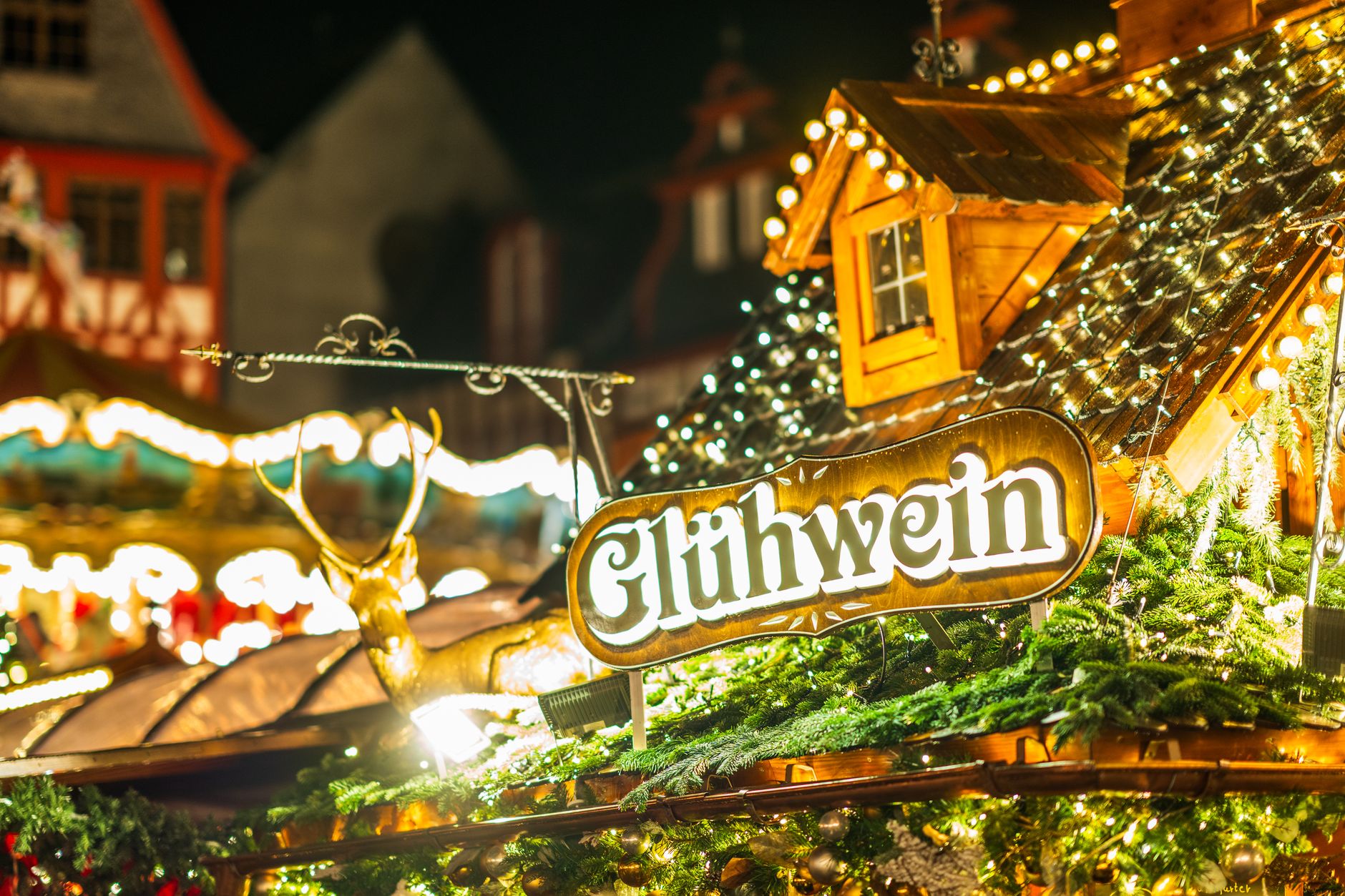
Frankfurt Christmas Market Parking: Römerberg, Paulsplatz and the Hauptwache
Parking for the 2026 Frankfurt Christmas Market (23 November to 22 December): which car parks serve the Römerberg, Paulsplatz and Hauptwache, what they charge, which streets close, and when park and ride at Borsigallee is worth it.
Dr. Eva Sommer25 September 2026
City Parking
Parking in Central Cologne: Cathedral Car Parks, Kerbside Rules and the Low-Emission Zone
Parking in central Cologne in 2026: what the garages at the cathedral, Heumarkt and the opera charge, €4 an hour at the kerb, the €5 all-day spaces, residents' permits from €100 and the low-emission zone.
Dr. Eva Sommer25 September 2026
City Parking
Parking in Central Munich: Garages, Residents' Zones and the Low-Emission Zone
Parking in central Munich in 2026: what garages from Marienplatz to the main station charge, €2.50 an hour on the old-town kerb, 77 residents' parking zones, three free hours for electric cars and the diesel ban on the Mittlerer Ring.
Dr. Eva Sommer25 September 2026
City Parking
Parking in Central Düsseldorf: Altstadt, Kö and Rhine Embankment Compared
Parking in central Düsseldorf in 2026: what the garages at the Rhine embankment, Grabbeplatz, Carlsplatz and the Kö charge, €4.50 an hour at the kerb until 10pm, the low-emission zone, residents' permits before the rise, and the Altstadt on weekend nights.
Dr. Eva Sommer25 September 2026
City Parking
Parking at the Festhalle Frankfurt: Exhibition Grounds Between Concert and Congress
Parking at the Festhalle Frankfurt: the Messeturm, Skyline Plaza and Rebstock car parks, the EUR 15 concert flat rate from 5pm, and the transit fare already bundled into your ticket (as of 2026).
Dr. Eva Sommer17 August 2026