Parking Apps in Germany: Which App Works Where, and What It Really Costs
An hour at the kerb in central Cologne costs €4, or €4.60, depending on which app you pay with. Paying by phone saves hunting for coins and often saves parking time too, but the service fees vary as much as the cities the apps work in.

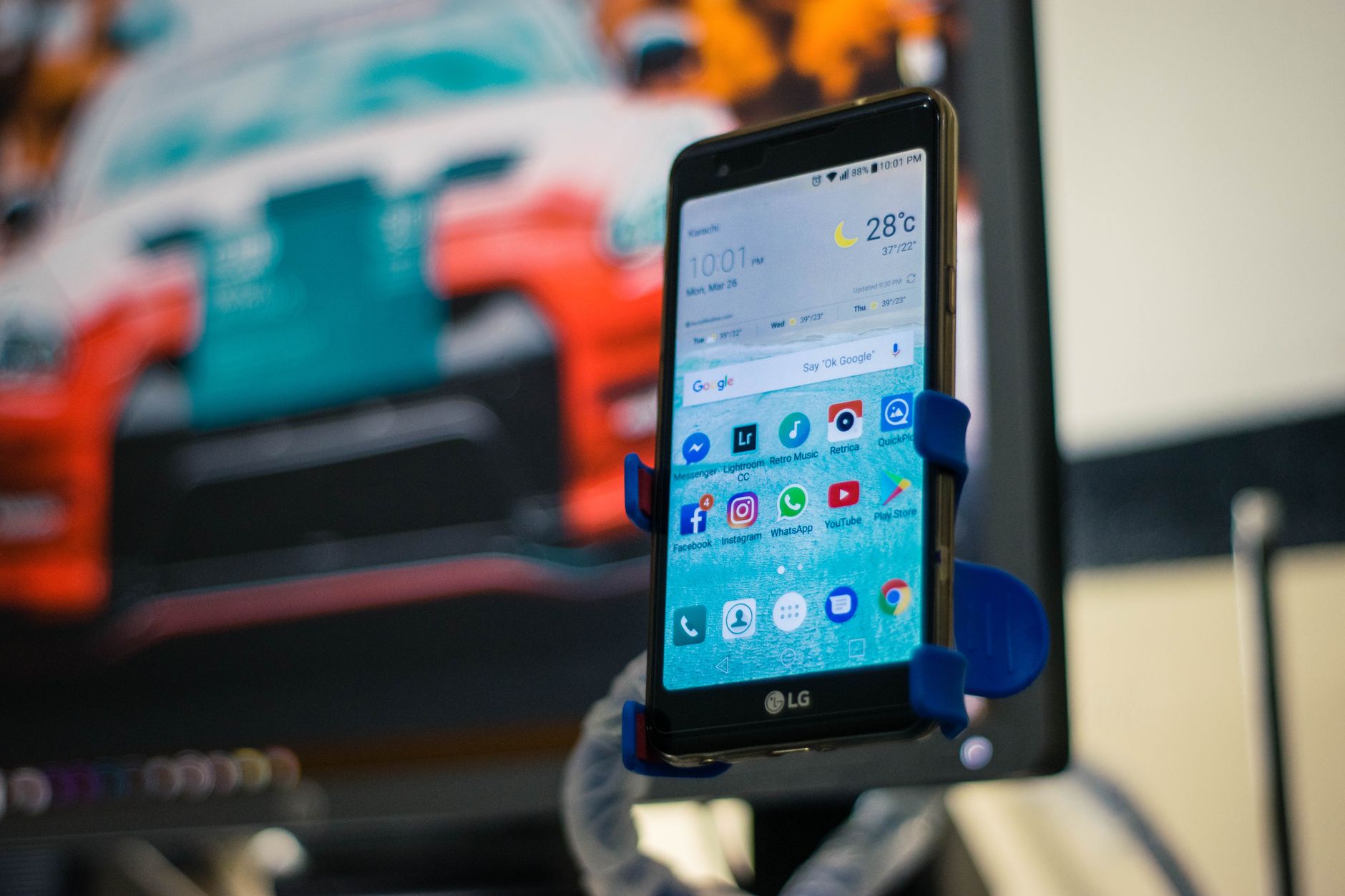
In Düsseldorf, 43 per cent of on-street parking revenue now comes through phone payments, up from 32 per cent the year before, according to figures the city published in May 2025. The pay-and-display machine has not disappeared, but it has competition, which is often cheaper and sometimes dearer. Which of the two depends on three things: the city, the app, and how long you actually park. Germans call the whole business Handyparken, “mobile-phone parking”, and it works rather differently from what British drivers may know from RingGo or PayByPhone at home.
How it works
The principle is the same in every app. You register once with your number plate and a payment method, choose the zone when you park (by GPS, from the app’s map, or by entering the zone code shown on the machine or a sign) and start the session. There is nothing to put behind the windscreen: the permission sits in the city’s system, and enforcement officers check the plate on their handheld devices. At the end you stop the session, or it ends at the time you chose in advance.
The real advantage is billing. At the machine you pay in fixed increments; by app, usually by the minute or in very small steps. In central Cologne the machine charges €1 per 15 minutes or part thereof, the app €0.20 per three minutes. For 20 minutes that means €2.00 at the machine and €1.40 by app, before any service fee. In Munich the machine in the old town counts in twelve-minute blocks, the app by the minute. If you often park briefly, you can easily save more than the app adds.
Which apps work where
There is no single app for the whole of Germany. Each municipality decides which providers to admit, and the German motoring club ADAC puts the consequence bluntly: one parking app is usually not enough.
The best overview comes from smartparking, an initiative of six providers: EasyPark, moBiLET, PayByPhone, Parkster, PARCO and Peuka. Its list runs to just over 400 entries, from whole municipalities to individual private car parks. Some examples (as of September 2026):
- Cologne, Berlin, Hamburg, Bonn: all six providers.
- Frankfurt am Main, Stuttgart, Wiesbaden: all except Peuka.
- Düsseldorf is not on the list; the city has its own contracts with PayByPhone (since 2013), EasyPark (since 2024) and Parkster (since May 2025).
- Munich goes its own way with the municipal HandyParken München app, run by the city transport operator MVG and the municipal utility, which according to ADAC only works in Munich.
- Dresden offers its own municipal e-ticket with no service fee, alongside EasyPark and Parkster; see our guide to parking in Dresden.
The municipal solutions are the cheapest: neither HandyParken München nor Dresden’s e-ticket adds a surcharge. The Munich app also applies the three free hours that cars with electric-vehicle plates get on public parking in Bavaria, automatically, once the car is registered as electric; how that rule works in detail is covered in our guide to parking in central Munich.
What the apps add on top
ADAC compared the fees of the six big providers (as of June 2026). The differences are larger than you might expect for such a uniform product:
| Provider | Service fee | Coverage in Germany |
|---|---|---|
| EasyPark | up to 15% per session, minimum fee €0–0.55 depending on location; or “Go” subscription at €3.99 a month | over 850 towns and cities |
| PayByPhone | usually up to 15%, minimum €0–0.49; free in some places | over 400 |
| Parkster | ”Neutral” free; “Express” and “Complete” €0.50 per session | over 650 |
| moBiLET | €0.10 per session, or €0.10 per euro (or part) of the parking fee | over 500 |
| PARCO | €0.15 plus 5% of the parking fee | almost 300 |
| Peuka | 10% in public zones | almost 60 |
Take an hour in central Cologne at €4.00. With Parkster Neutral you pay €4.00, with moBiLET €4.10 or €4.40 depending on the billing model, with PARCO €4.35, with Peuka €4.40 and with EasyPark or PayByPhone up to €4.60. That is 60 cents’ difference for the same hour in the same space.
The minimum fee bites harder on small tickets. From 1 October 2026 a ten-minute ticket in Stuttgart’s city centre costs €1.40. If a minimum at the top of the range applies there, €0.55, that is a surcharge of almost 40 per cent. How Stuttgart is reorganising its tariffs is explained in our guide to parking in central Stuttgart.
For frequent parkers a subscription can pay off. EasyPark’s €3.99-a-month “Go” plan only beats a 15 per cent surcharge from about €27 of parking a month, and only if EasyPark is admitted in the places where you park. A platform adding its own margin to a base price is familiar from ride-hailing, too; how Uber’s fares are built up in German cities, and when the regulated taxi tariff is cheaper, is set out in this overview of Uber prices in Germany.
The traps
The wrong zone. ADAC names inaccurate GPS as a frequent source of error: the app suggests the neighbouring zone, you confirm, and nothing is booked for your space. Always check the zone code against the machine or the sign, especially at zone boundaries where two tariffs meet.
Forgetting to stop. Per-minute billing only helps if you stop. With HandyParken München’s FlexParken option, for example, the maximum tariff is reserved first (the operator gives €11 or €15 as examples) and only what you owe is actually charged; forget to stop and you pay up to that cap. Most apps offer a reminder before time runs out; with PayByPhone the SMS version costs €0.15.
The maximum stay still applies. The app replaces the ticket, not the signs. You can only extend within the maximum stay shown on the sign, as the city of Düsseldorf spells out. If you want to stay longer in a one-hour zone, you have to move the car, however inviting the extend button looks.
The wrong number plate. Enforcement checks the plate, not the phone. If you are driving a hire car, add its plate to the app before you park, ideally at pick-up; how collection works at Germany’s largest airport is covered in the Frankfurt city guide’s article on car hire at Frankfurt Airport.
Fake QR codes. The city of Cologne and Munich’s transport association have warned about stickers on parking machines whose QR codes lead to fraudulent payment pages. Download parking apps only from the app store, never via a code on a machine.
The windscreen note. Some smaller towns require a notice behind the windscreen in addition to the digital ticket. Providers offer templates for this; a handwritten note is often enough.
When nothing works. If both machine and app fail, ADAC says you must look for a working machine within a radius of at least 150 metres. If there is none, you may display a parking disc up to the maximum permitted stay; a handwritten note does not count. Photograph the broken machine with its number. Caught with no valid ticket at all, you face a fixed penalty of €20 to €40, scaled by duration.
Where the app does not help
Paying by phone is primarily a tool for public streets. In multi-storeys and underground garages the operators’ own tariffs apply, usually paid at a machine; some apps now read the plate by camera and open the barrier, PayByPhone in over 150 garages according to ADAC. At airports the parking app plays practically no role: you pay at the barrier or book ahead, as this guide to parking at Frankfurt’s Terminal 1 and its pay stations shows. And in Cologne, looking underground pays off more than any app: the garages around the cathedral differ in price by more than 100 per cent, as our guide to parking in central Cologne shows.
Abroad, some apps keep working: EasyPark in more than 21 countries according to ADAC, including Austria, Switzerland, Italy and France; Parkster in Austria too, though not on the fee-free Neutral plan. On a drive to those countries the vignette or motorway tolls are usually the bigger item, and for the distances and drive times involved a route and distance calculator helps with the planning.
Which apps I would install
I would use the municipal option first wherever it exists (HandyParken in Munich, the e-ticket in Dresden) because it adds nothing. As a second app I would set up Parkster on the Neutral plan, which works in over 650 towns without a service fee. EasyPark would be my third choice, for places where only EasyPark is admitted, and the subscription only if I regularly spent more than €27 a month on parking.
Paying for parking by phone is one of the few areas of motoring where convenience and thrift can point the same way, provided you choose the app by its fees rather than its fame. Figures are as of 2026; the price shown in the app before you start the session is what counts.
Keep reading
Costs & Rules
Parking at the Supermarket: a Contract Penalty, Not a Fine
Car parks at Lidl, Aldi and the rest in 2026: why what you face is a contractual penalty rather than a fine, when it is enforceable, and what ground sensors change.
Dr. Eva Sommer13 August 2026
Costs & Rules
Valet Parking: Who Is Liable When the Car Comes Back
Valet parking at airports and hotels: why handing over the key creates a bailment, how far liability extends, and what to document before you walk away.
Dr. Eva Sommer14 August 2026
City Parking
Frankfurt Christmas Market Parking: Römerberg, Paulsplatz and the Hauptwache
Parking for the 2026 Frankfurt Christmas Market (23 November to 22 December): which car parks serve the Römerberg, Paulsplatz and Hauptwache, what they charge, which streets close, and when park and ride at Borsigallee is worth it.
Dr. Eva Sommer25 September 2026
Airport Parking
Cologne Bonn Airport Parking: the Fourth Day Costs One Euro
Parking at Cologne Bonn Airport in 2026: official tariffs for P1, P2, P3 and Parkplatz Nord, the online rate from €39 a week, the three-euro Sunday, and a check against Düsseldorf.
Dr. Eva Sommer17 September 2026
Airport Parking
Parking at Frankfurt Airport: €258 a Week, or €64
What parking at Frankfurt Airport costs in 2026: €43 a day and €258 a week at the barrier, from €64 booked online. The tariff steps, the weekly cap and the VAT line on the receipt.
Dr. Eva Sommer24 August 2026